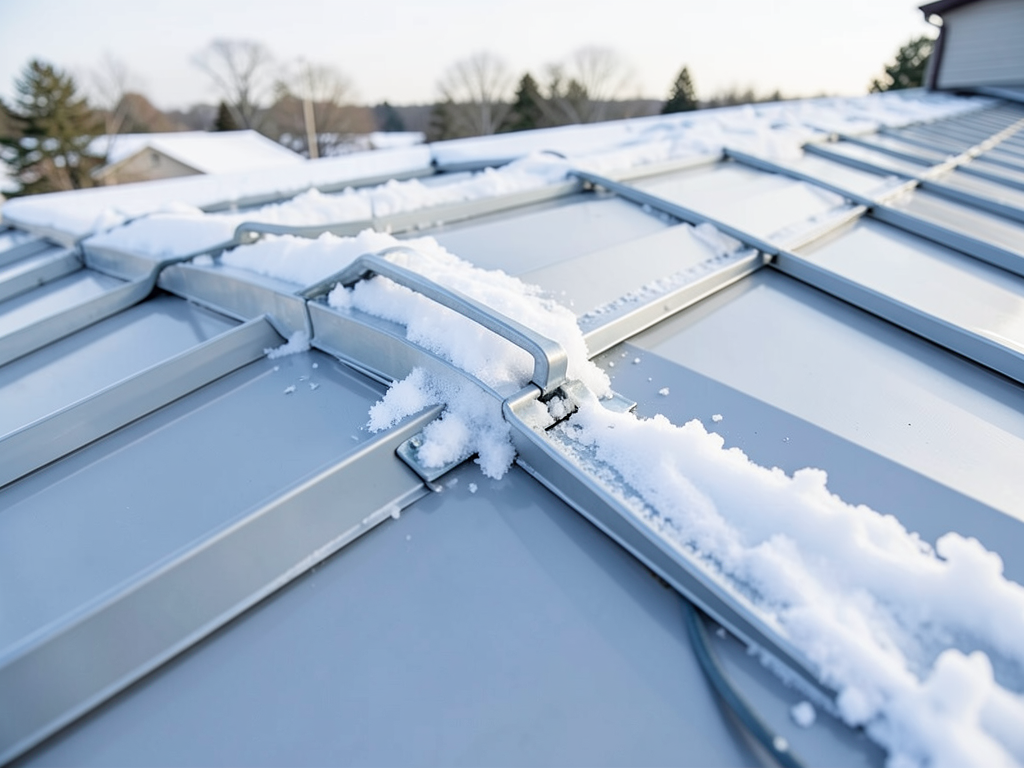
St. Louis experiences an average of 20 freeze-thaw cycles per winter, creating expansion and contraction that opens seams in aging industrial roof membranes. When daytime temperatures climb above freezing and nighttime lows drop back below 32 degrees, trapped moisture expands as it freezes, pushing fasteners upward and cracking brittle membrane materials. Industrial facilities compound this stress with concentrated dead loads from material storage, overhead cranes, and dense HVAC equipment arrays. Warehouses near the Mississippi River bottomlands face additional humidity that keeps insulation damp, reducing its structural integrity and accelerating metal deck corrosion. These combined factors explain why warehouse roof replacement timelines in St. Louis run shorter than national averages.
St. Louis commercial building codes require specific wind uplift ratings and fire classifications for industrial occupancies, standards that changed significantly after severe weather events in recent years. Pioneer Roofing St. Louis maintains current knowledge of these evolving requirements across multiple jurisdictions, from the City of St. Louis to St. Charles County industrial parks. We work directly with local inspectors who understand regional construction practices and can expedite permitting for time-sensitive projects. Our relationships with St. Louis-area material suppliers ensure we source membrane systems and insulation products that match both code requirements and the performance demands of Mississippi River valley humidity conditions. This local expertise eliminates the costly change orders and project delays that occur when out-of-area contractors misinterpret regional standards.