menu

Emergency Roof Leak Detection in St. Louis – 24/7 Response Teams Stop Water Damage in Under 90 Minutes

When water pours through your ceiling at 2 AM or soaks your attic during a storm, immediate roof leak locator teams arrive fast to trace the source, contain damage, and protect your property before mold or structural issues take hold.

Slider Image 1
Slider Image 2
Slider Image 3
Slider Image 4
Slider Image 5
Slider Image 7
Slider Image 8
Slider Image 9
Slider Image 10
Slider Image 11

Why St. Louis Roof Leaks Demand Immediate Action

You hear dripping. You see a wet spot spreading across your ceiling. Panic sets in because you know water does not stop on its own.

St. Louis homes face a brutal combination of freeze-thaw cycles, heavy spring thunderstorms, and summer humidity that punishes roofing systems year-round. When temperatures drop below freezing after a February rain, ice dams form along gutters and force water under shingles. When June storms dump two inches of rain in 30 minutes, clogged valleys and deteriorated flashing turn into entry points. Your roof might have held for years, but one compromised penetration or cracked boot around a vent pipe is all it takes.

Water moves fast. It spreads across insulation, seeps into wall cavities, and saturates drywall before you even realize the scope of the problem. Within 24 hours, mold spores begin colonizing damp materials. Within 48 hours, ceiling joists start swelling. Every minute you wait increases repair costs and health risks.

Urgent roof leak inspection is not about scheduling convenience. It is about stopping destruction before it compounds. Same day roof leak detection means finding the exact breach point, not just patching visible symptoms. Emergency roof leak tracing requires infrared moisture meters, dye testing, and attic access to track water migration paths through your roof deck and insulation.

You need someone who answers the phone at midnight, arrives with diagnostic equipment, and knows how St. Louis weather patterns create failure points in local roofing materials. You need 24/7 roof leak diagnosis that identifies the real problem, not a temporary fix that fails again next month.

Why St. Louis Roof Leaks Demand Immediate Action
How Professional Leak Detection Finds Hidden Water Intrusion

How Professional Leak Detection Finds Hidden Water Intrusion

Most homeowners look at a ceiling stain and assume the leak sits directly above. Wrong. Water travels horizontally along rafters, follows roof decking seams, and drips wherever gravity pulls it through the weakest point. The visible damage is rarely the entry point.

Professional emergency roof leak tracing starts with a thermal imaging scan of your attic and ceiling. Infrared cameras reveal temperature differentials where moisture has saturated insulation or pooled on drywall backing. This shows the full spread of water intrusion, not just the drip you see.

Next comes roof surface inspection under flashlight or daylight. We check every penetration: plumbing vents, exhaust fans, chimney flashing, skylight curbs, and satellite dish mounts. We examine valley metal for corrosion pits, step flashing for separation from siding, and ridge vents for wind-lifted shingles. St. Louis homes built before 1990 often have original galvanized valley metal that rusts through after 30 years. Homes in historic districts like Lafayette Square frequently have flat-seam metal roofs where soldered joints fail from thermal expansion.

If the entry point is not obvious, we use moisture meters to probe sheathing and rafters. We perform water testing by running a hose on suspected areas while someone monitors the attic for active drips. We trace stains backward along framing members until we locate the breach.

This is forensic work. It requires understanding how St. Louis clay soil causes foundation settlement that shifts ridge beams and creates new gaps in flashing. It requires knowing that our spring hail storms crack aging three-tab shingles but leave impact marks you cannot see from the ground. Immediate roof leak locator service is not guesswork. It is methodical diagnosis that stops at nothing until we find the source.

What Happens When You Call for Emergency Leak Detection

Emergency Roof Leak Detection in St. Louis – 24/7 Response Teams Stop Water Damage in Under 90 Minutes
01

Immediate Dispatch and Damage Control

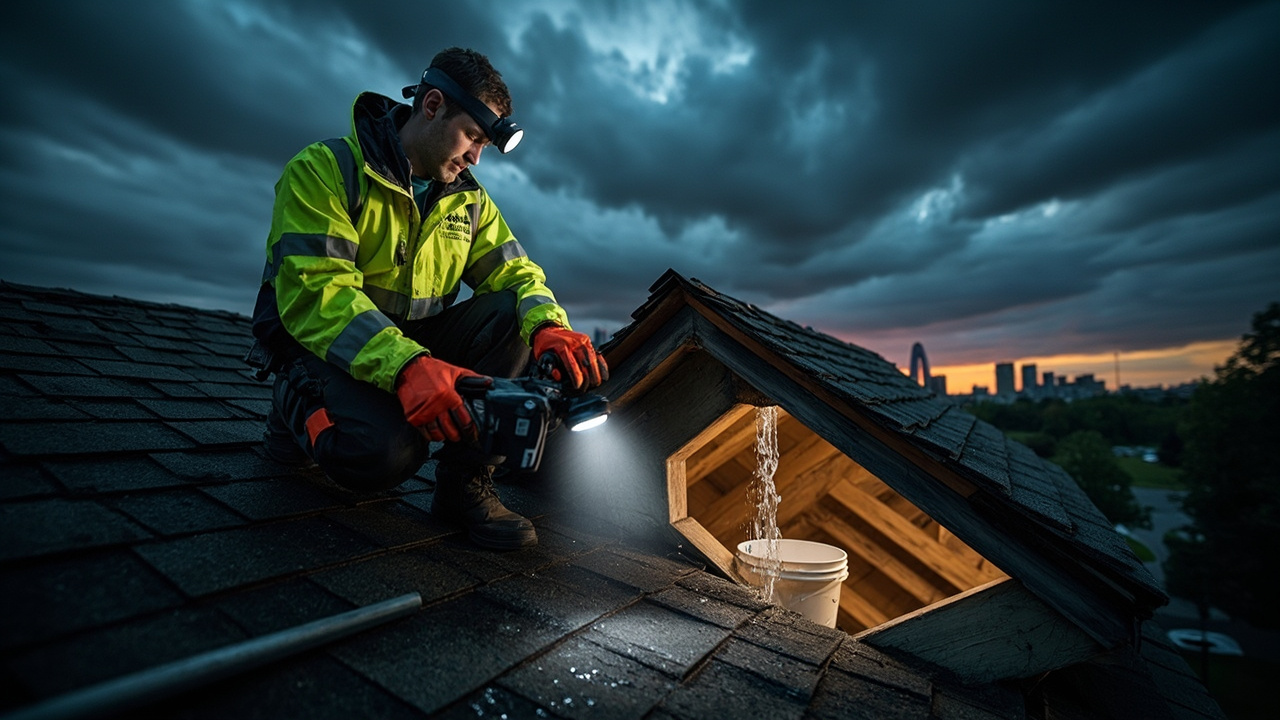
We answer emergency calls 24/7, dispatch a technician within the hour, and arrive with tarps, buckets, and moisture containment equipment. The first priority is stopping active water intrusion with temporary roof coverage and protecting your belongings from further damage. We document the visible damage with photos for insurance claims, move furniture if needed, and set up dehumidifiers if water has saturated flooring or walls.
02

Comprehensive Leak Tracing

Once the immediate crisis is contained, we conduct a full diagnostic inspection using thermal imaging, moisture meters, and visual examination of all roof penetrations and flashing details. We access your attic to trace water stains along rafters and decking. We inspect the roof surface for compromised shingles, separated flashing, or damaged valleys. We identify not just the leak source but any secondary vulnerabilities that could fail next. This step takes 60 to 90 minutes depending on roof complexity.
03

Repair Plan and Execution

After pinpointing the breach, we explain the repair scope, provide a written estimate, and begin permanent fixes. Emergency repairs often involve flashing replacement, shingle section replacement, or resealing around penetrations. We coordinate with your insurance adjuster if storm damage is involved. We perform moisture remediation in affected interior spaces to prevent mold growth. You receive documentation of all repairs and a follow-up inspection after the next significant rain to confirm the leak is fully resolved.

Why St. Louis Property Owners Trust Pioneer Roofing for Emergency Response

When water is pouring into your home, you need someone who understands St. Louis roofing systems inside and out. Pioneer Roofing St. Louis has spent years diagnosing leaks in every architectural style this city offers, from the brick colonials in Webster Groves to the flat commercial roofs downtown.

We know that older homes in neighborhoods like Soulard and Tower Grove South often have hidden second layers of roofing that trap moisture and create mystery leaks. We know that newer subdivisions in West County used fast-track construction methods where flashing installation was rushed and now fails prematurely. We know that St. Louis's volatile spring weather, where temperatures swing 40 degrees in 12 hours, causes sealant failures around roof penetrations.

Our technicians carry diagnostic tools most roofing companies do not own. Thermal cameras cost thousands, but they find leaks in minutes that would take hours of destructive probing otherwise. Our moisture meters detect saturation invisible to the naked eye. Our experience with local building codes means we know exactly what St. Louis County inspectors require when flashing repairs need permits.

You also get honest assessment. If your leak is a simple boot replacement, we tell you that. If it signals broader roof failure, we document it thoroughly so you can make an informed decision. We work directly with insurance adjusters and provide detailed photo documentation that supports your claim.

Emergency response is not just about speed. It is about arriving prepared, diagnosing accurately, and fixing it right the first time. When you call Pioneer Roofing St. Louis at 3 AM because your bedroom ceiling is dripping, you get a trained professional who has seen your exact problem dozens of times and knows precisely how to stop it.

What to Expect During Emergency Roof Leak Detection

Response Time and Availability

We operate 24 hours a day, 365 days a year, because roof leaks do not wait for business hours. When you call our emergency line at (314) 417-7774, you speak to a dispatcher immediately, not a voicemail system. We dispatch a technician within 60 minutes and provide an estimated arrival time based on your location and current traffic conditions. For severe storm events when multiple calls come in simultaneously, we triage based on severity and dispatch additional crews as needed. Your call is answered, your emergency is prioritized, and help is on the way faster than you expect.

Diagnostic Process and Assessment

Emergency leak detection is a methodical process, not a quick guess. Our technician performs an exterior roof inspection, attic access if available, and thermal imaging scan to map moisture intrusion. We identify the entry point, assess the extent of water damage to insulation and framing, and check for secondary issues like compromised decking or mold colonization. You receive a verbal explanation of findings on-site and a written assessment within 24 hours. We photograph all problem areas and provide documentation for insurance purposes. The diagnostic process typically takes 60 to 90 minutes depending on roof complexity and accessibility.

Repair Quality and Materials

Emergency repairs are not temporary patches that fail in three months. We use the same quality materials and installation techniques as scheduled roof work. If your leak requires flashing replacement, we install ice and water shield underlayment and properly integrate new metal with existing roofing. If shingles need replacement, we match your existing material and ensure proper nailing and sealant application. All work meets St. Louis County building code requirements. We do not use tar or caulk as permanent solutions. You get a repair that holds for years, not weeks, because cutting corners during an emergency only creates repeat failures.

Follow-Up and Ongoing Protection

After completing emergency repairs, we schedule a follow-up inspection after the next significant rain event to confirm the leak is fully resolved. You receive a written summary of all work performed, materials used, and any additional recommendations for roof maintenance. If your roof showed signs of broader deterioration during our inspection, we provide a comprehensive assessment and discuss replacement options. We also offer preventive maintenance plans that include annual inspections and minor repairs before small issues become emergency leaks. Our goal is not just stopping today's crisis but preventing next month's disaster.

Frequently Asked Questions

You Have Questions,
We Have Answers

How to figure out where a roof leak is coming from? +

Start inside where you see the water stain. Trace upward and toward the roof's highest point because water travels downhill along rafters and sheathing. Check your attic during daylight for light penetration or water marks on wood. Outside, inspect shingles, flashing around chimneys and vents, and valleys where two roof planes meet. St. Louis freeze-thaw cycles crack sealant and loosen shingles, so focus on these vulnerable areas. If you cannot pinpoint the source within 30 minutes, call a professional. Water damage spreads fast, and guessing costs you money.

Is my roof leaking an emergency? +

Yes. Any active leak is an emergency in St. Louis because moisture accelerates mold growth in our humid climate. Water compromises ceiling drywall, insulation, and electrical wiring within hours. If you see dripping, bulging ceilings, or hear water running inside walls, act immediately. Place buckets to catch water, move valuables, and call a 24/7 roof repair company. Even small leaks during storms can expand rapidly as wind drives rain sideways under shingles. Do not wait until morning. Delaying repair turns a fixable problem into structural damage that costs thousands more.

What to do when you can't find a roof leak? +

Call a professional with thermal imaging and moisture meters. Hidden leaks often originate far from visible stains because water travels along roof decking before dropping through. In St. Louis, ice dams and wind-driven rain push water under shingles in unexpected places. A roofer will perform a water test by running a hose on suspected areas while someone monitors the interior. They check hidden spots like step flashing behind siding, boot seals around vent pipes, and valley metal. Do not keep searching alone. Undetected leaks cause mold and rot that compromise your roof structure.

How to stop a roof leak temporarily? +

Place a bucket under the drip and move furniture immediately. Inside your attic, lay tarps over insulation to prevent saturation. Outside, apply roofing tape or a small tarp secured with sandbags over the suspected leak area. Do not climb on a wet roof during storms. For emergency situations, roofing caulk can seal small gaps around flashing temporarily. In St. Louis, sudden storms demand fast action to prevent ceiling collapse. These fixes buy you 24 to 48 hours maximum. Schedule permanent repair immediately because temporary patches fail under our weather extremes and void most warranties.

What is the most common source for roof leaks? +

Damaged or improperly installed flashing causes most roof leaks in St. Louis. Flashing seals joints where your roof meets chimneys, walls, skylights, and vent pipes. Our freeze-thaw cycles crack caulk and warp metal flashing, creating gaps. Second most common is missing or curled shingles from wind and hail. Valleys where two roof slopes meet also fail when debris clogs them and water backs up under shingles. Older homes in historic St. Louis neighborhoods often have original flashing that has exceeded its lifespan. Inspect flashing annually to catch problems before leaks start.

Will homeowners insurance pay for a leaky roof? +

Maybe. Homeowners insurance typically covers sudden roof damage from storms, hail, or falling trees in St. Louis. Insurers deny claims for leaks caused by deferred maintenance, wear, or aging shingles. Document everything with photos and timestamps. Get a professional inspection report that identifies storm damage versus pre-existing conditions. Insurance adjusters look for wind-torn shingles and impact marks. File claims immediately after severe weather. Many St. Louis policies include a depreciation clause that reduces payout on older roofs. Review your policy and ask your roofer to work directly with your adjuster to maximize coverage.

What is the average cost to repair a roof leak? +

Roof leak repairs in St. Louis range significantly based on damage extent and location. Simple flashing repairs or replacing a few shingles cost less than fixing structural rot or replacing large sections. Emergency repairs during storms cost more due to 24/7 response. Factors affecting price include roof pitch, height, accessibility, and whether decking needs replacement. Clay soil in St. Louis causes foundation shifts that stress roof structures, sometimes requiring additional framing work. Most companies provide free inspections and written estimates. Get three quotes. Avoid the lowest bid because cheap repairs fail fast and cost more long-term.

How long can a ceiling leak before it collapses? +

Ceiling collapse timing varies from hours to weeks depending on water volume, ceiling material, and structural support. Drywall ceilings sag and collapse faster than plaster. Continuous leaks during St. Louis thunderstorms can saturate drywall in six to eight hours. You will see bulging, discoloration, and crackling sounds before failure. If your ceiling sags more than half an inch or feels soft when touched, evacuate that room immediately. Poke a small hole to drain trapped water and reduce weight, but stay clear of the area. Call emergency services if collapse seems imminent. Water-damaged ceilings are unpredictable and dangerous.

Is it normal for a roof to leak in heavy rain? +

No. A properly installed roof should never leak, even during heavy St. Louis downpours. Wind-driven rain can expose existing flaws like lifted shingles, failed sealant, or inadequate underlayment. Older roofs with worn shingles or clogged gutters often leak during storms because water overwhelms compromised defenses. If your roof only leaks in heavy rain, you have a failure point that needs immediate repair. Water infiltration will worsen with each storm. Do not accept leaks as normal. Schedule an inspection after the weather clears to identify and fix the vulnerability before the next storm hits.

How do plumbers find hidden leaks? +

Plumbers find hidden leaks using pressure testing, acoustic listening devices, and thermal imaging cameras. They isolate sections of your plumbing by shutting off valves and monitoring pressure drops. For slab leaks common in St. Louis homes built on clay soil, they use electronic amplification to hear water escaping underground. Thermal cameras detect temperature differences where water saturates materials. Moisture meters measure hidden dampness in walls and ceilings. If your roof leak might actually be plumbing related, a roofer will refer you to a licensed plumber. Correct diagnosis matters because roof repairs will not fix pipe leaks.

How St. Louis Freeze-Thaw Cycles and Clay Soil Create Sudden Roof Failures

St. Louis sits at the intersection of two roofing nightmares. Winter freeze-thaw cycles cause ice dams when daytime temperatures climb to 40 degrees and nighttime temps drop to 15. Melted snow refreezes along eaves, backs up under shingles, and forces water through nail penetrations. Spring storms dump heavy rain on roofs where winter damage has already compromised flashing and sealant. The clay soil beneath St. Louis homes expands and contracts with moisture changes, causing foundation settlement that shifts roof framing and opens gaps at chimney flashing and valley metal. These conditions do not exist in dry climates or stable soil regions. Emergency roof leak tracing in St. Louis requires understanding how local environmental factors create failure points unique to this region.

Pioneer Roofing St. Louis has diagnosed leaks in every St. Louis neighborhood from the historic brick homes in the Central West End to the modern subdivisions in Chesterfield. We understand how local building practices and material choices affect roof longevity. We know that homes built during the 1980s construction boom often have inadequate attic ventilation that accelerates shingle aging. We know that St. Louis County requires specific flashing details around chimneys that many out-of-town contractors ignore. When you need urgent roof leak inspection, you need someone who understands this city's roofing challenges at a granular level. Local expertise is not a marketing claim. It is the difference between finding the leak in 30 minutes versus tearing apart your ceiling for three hours.
Roofing Services in The St. Louis Area

Pioneer Roofing is proud to serve the entire St. Louis metropolitan area and surrounding communities. Our local presence means we are always nearby and ready to respond quickly to your roofing needs, whether you are located in the heart of St. Louis or the greater county. View our location and service radius on the map to confirm we cover your neighborhood and then call us to schedule your service!

Address:
Pioneer Roofing St. Louis, 1031 Lami St, St. Louis, MO, 63104

Additional Services We Offer

Our news updates

Latest Articles & News from The Blogs

Can You Actually Install a New Roof Over Your Old Shingles? Roofing a home in St. Louis comes with unique…

Can You Actually Install a New Roof Over Your Old Shingles?

Can You Actually Install a New Roof Over Your Old Shingles? Roofing a home in St. Louis comes with unique…

Why Your Neighbors in Manchester are Choosing Impact Rated Materials

Why Your Neighbors in Manchester are Choosing Impact Rated Materials Living in Manchester means dealing with the unpredictable St. Louis…

Preparing Your Roof for the Sudden Shifts of St. Louis Weather Patterns

Preparing Your Roof for the Sudden Shifts of St. Louis Weather Patterns Your roof faces more than just rain and…

Contact Us

Do not wait for the stain to spread or the drip to worsen. Call Pioneer Roofing St. Louis at (314) 417-7774 right now for same day roof leak detection. Our emergency crews are standing by 24/7 with the equipment and experience to find your leak and stop the damage before it costs you thousands.