menu

Mold & Algae Stain Removal in St. Louis | Stop Roof Damage Before It Spreads

Expert roof fungus cleaning and organic stain treatment protects your shingles from premature failure caused by aggressive algae growth common throughout the St. Louis metro area.

Slider Image 1
Slider Image 2
Slider Image 3
Slider Image 4
Slider Image 5
Slider Image 7
Slider Image 8
Slider Image 9
Slider Image 10
Slider Image 11

Why Black Streaks and Green Patches Are Taking Over St. Louis Roofs

You probably noticed it slowly. A few dark streaks near the north-facing slope. Then green or black patches spreading across the shingles. Now half your roof looks dirty, and you are wondering if it is just cosmetic or something worse.

St. Louis's humid continental climate creates the perfect breeding ground for Gloeocapsa magma, the cyanobacteria responsible for those black streaks on your roof. Our region sees an average of 42 inches of rain annually, combined with hot, sticky summers. That moisture lingers on shaded roof sections, especially those facing north or shaded by mature oaks and maples common in neighborhoods like Webster Groves, Clayton, and University City.

The streaks are not just ugly. The algae feed on the limestone filler in asphalt shingles, breaking down the protective granules. This accelerates deterioration, reduces your roof's ability to reflect UV rays, and can shorten its lifespan by years. Roof mildew removal is not optional if you want to protect your investment.

Moss and lichen often follow algae, especially on roofs with poor drainage or heavy tree cover. Moss roots burrow under shingle edges, lifting them and creating entry points for water. During freeze-thaw cycles in January and February, that trapped moisture expands, cracking shingles and causing leaks.

You might think pressure washing will solve it. It will not. High pressure damages shingles, strips granules, and voids manufacturer warranties. Removing organic roof stains requires a methodical approach that kills the organisms without harming your roof system.

Why Black Streaks and Green Patches Are Taking Over St. Louis Roofs
The Safe, Effective Method for Roof Algae Treatment

The Safe, Effective Method for Roof Algae Treatment

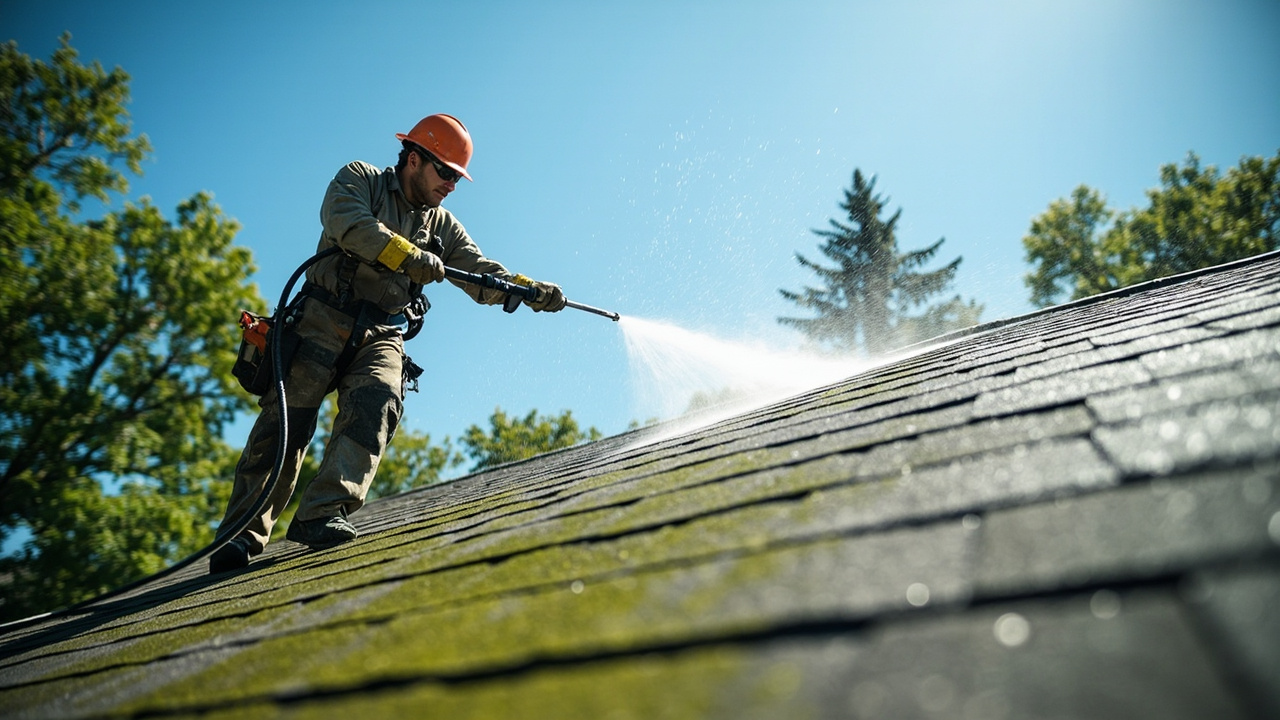
Shingle algae treatment requires precision, not brute force. We use a low-pressure soft wash system combined with a biodegradable cleaning solution designed to kill algae, moss, and lichen at the root level without stripping protective granules.

The process starts with a thorough roof inspection. We identify the type of growth, check for underlying damage, and assess shingle condition. Not all stains are algae. Sometimes you are dealing with mold, mildew, or a combination. Each requires a slightly different approach.

Our cleaning solution is applied at garden hose pressure, never exceeding 300 PSI. The formula contains sodium hypochlorite and surfactants that break down the cell walls of Gloeocapsa magma and other organisms. It penetrates the shingle surface, killing the algae and preventing regrowth for months or even years, depending on environmental conditions.

We let the solution dwell for 15 to 20 minutes, giving it time to work. Then we rinse with controlled, low-pressure water. The black streaks wash away without damaging the roof. For moss and lichen, we may need to gently brush or scrape stubborn areas before rinsing.

Roof fungus cleaning is not a one-size-fits-all service. Older roofs with brittle shingles require even gentler handling. Roofs with heavy moss buildup may need a second treatment. We adjust our approach based on your roof's age, material, and condition.

Pioneer Roofing St. Louis does not use high-pressure washers. We do not cut corners. We follow ARMA guidelines and manufacturer recommendations to preserve your shingle warranty while delivering visible, lasting results.

What Happens During Your Roof Cleaning Appointment

Mold & Algae Stain Removal in St. Louis | Stop Roof Damage Before It Spreads
01

Inspection and Damage Assessment

We start by walking your roof to identify stain types, check flashing and valleys, and document any damage caused by algae or moss. You get a full condition report before we begin. We look for lifted shingles, granule loss, and areas where organic growth has compromised the roof deck. This step ensures we know exactly what we are treating and whether additional repairs are needed.
02

Soft Wash Application

We apply our biodegradable cleaning solution using a low-pressure pump sprayer, starting at the ridge and working down. The formula is allowed to dwell while we protect landscaping, gutters, and siding from runoff. We monitor the process closely, adjusting dwell time based on stain severity and shingle type. This is where the algae and moss die, setting the stage for complete removal.
03

Rinse and Final Inspection

We rinse the roof with controlled, low-pressure water, washing away dead algae, moss, and residue. A final walk-through ensures complete stain removal and confirms no shingles were damaged. You get before-and-after documentation and guidance on preventing future growth. Your roof looks clean, and the shingles are protected without granule loss or warranty issues.

Why St. Louis Homeowners Trust Local Roof Cleaning Experts

Removing black streaks on a roof is not a DIY project, and it is not a job for a pressure washing company that treats roofs like driveways. You need a roofing contractor who understands shingle composition, manufacturer guidelines, and local climate factors.

Pioneer Roofing St. Louis specializes in roof fungus cleaning for St. Louis's unique conditions. We know the tree canopy density in neighborhoods like Kirkwood and Brentwood creates heavy shade, accelerating algae growth. We understand that homes near Forest Park or along the Mississippi River corridor face higher humidity and moisture exposure.

We also know that St. Louis building codes and HOA guidelines in areas like Ladue and Town and Country often require roof cleaning before visible deterioration impacts property values. A stained roof can lower curb appeal and complicate resale. We help you maintain both the function and appearance of your roof.

Our team is trained on ARMA soft wash protocols and manufacturer specifications for major shingle brands like CertainTeed, GAF, and Owens Corning. We do not void your warranty. We follow the exact cleaning methods recommended by the manufacturers themselves.

We also carry full liability insurance and workers' compensation coverage. Roof work is dangerous. You should never hire someone without proof of insurance. If a worker is injured on your property, you could be liable. We protect you from that risk.

Local expertise matters. We have cleaned roofs across St. Louis County and St. Charles County for years. We know which products work best on the shingle types common in this region. We know how to handle the freeze-thaw damage that comes after organic growth lifts shingle edges. You are not getting a generic service. You are getting targeted expertise.

What to Expect When You Schedule Roof Stain Removal

Fast Scheduling and Service

Most roof cleaning appointments are scheduled within one to two weeks, depending on weather and demand. The actual cleaning process takes three to six hours for an average residential roof. We work efficiently without rushing, ensuring complete coverage and thorough rinsing. You do not need to be home during the service, but we will walk you through the results when we finish.

Detailed Property Protection

Before we start, we wet down all landscaping, cover delicate plants with tarps, and protect siding and windows from overspray. Gutters are flushed after cleaning to remove any residue. We take extra care around flowerbeds, shrubs, and decorative plantings common in St. Louis yards. Your property is left clean and undamaged. If you have specific concerns about landscaping or outdoor features, let us know during scheduling.

Visible, Immediate Results

You will see the difference as soon as we rinse. Black streaks disappear, green patches are gone, and your roof looks years younger. The cleaning solution continues working for days after application, killing any remaining spores. Shingles regain their original color and reflectivity, improving energy efficiency and curb appeal. You get photo documentation showing the transformation from stained to clean.

Prevention and Maintenance Guidance

After cleaning, we provide recommendations for preventing future growth. This might include trimming overhanging branches, improving attic ventilation, or installing zinc or copper strips along the ridge to inhibit algae. Most roofs stay clean for two to four years before retreatment is needed. We offer maintenance plans for homeowners who want scheduled cleanings to keep their roofs in top condition year-round.

Frequently Asked Questions

You Have Questions,
We Have Answers

Can algae stains be removed? +

Yes, algae stains can be removed from roofs, siding, and concrete in St. Louis. Those dark streaks you see are typically gloeocapsa magma, a blue-green algae that thrives in our humid Mississippi River Valley climate. Professional soft washing with specialized biocides kills the algae at the root and lifts stains without damaging shingles. Avoid pressure washing, which can strip granules and void warranties. DIY bleach solutions work temporarily but often miss the root system, causing faster regrowth. St. Louis homes face constant moisture exposure, so proper treatment and preventive zinc strips help keep surfaces clean longer.

Can active mold stains be removed? +

Active mold stains require immediate professional attention in St. Louis. While surface stains can be treated, active mold indicates ongoing moisture intrusion, common in our basements and attics due to humidity and seasonal flooding. Cleaning visible stains without addressing the moisture source just masks the problem. You need containment, HEPA filtration, antimicrobial treatment, and source remediation. Our clay soil and older housing stock create perfect conditions for recurrence. Surface cleaning with household products may spread spores and worsen indoor air quality. Professional mold remediation targets both the visible growth and hidden colonies behind walls or under flooring.

What is the best algae mold remover? +

The best algae and mold remover for St. Louis roofs is a professional-grade sodium hypochlorite solution applied through soft washing, not pressure. This method kills organisms at the cellular level without damaging shingles. Retail products like Wet and Forget work slowly and require multiple applications in our humid climate. Oxygen bleach is gentler but less effective on stubborn growth. The application method matters as much as the product. Professionals dilute concentrations properly, allow dwell time, and rinse correctly to prevent runoff damage to landscaping. DIY sprays often lack the potency needed for our persistent regional strains.

What's the best mold and mildew stain remover? +

For St. Louis homes, professional antimicrobial treatments outperform retail stain removers on exterior surfaces. Concrobium and RMR-86 work on interior non-porous surfaces but do not address root systems on roofing or siding. The Mississippi River Valley's constant humidity means surface-only treatments fail quickly. Sodium hypochlorite-based solutions remain most effective for killing mold and mildew spores, especially on organic materials like wood and composite. Concentration, contact time, and application technique determine success. Store-bought sprays lack the penetration needed for porous surfaces common in older St. Louis neighborhoods. Always address moisture sources first or stains return within months.

Does white vinegar remove algae stains? +

White vinegar removes light algae stains on some surfaces but fails on St. Louis roofs and siding. Its 5 percent acetic acid content works on fresh growth on concrete or tile but cannot penetrate the biofilm layers that develop in our humid climate. Algae on shingles often embeds into granules, requiring stronger biocides. Vinegar also requires extended contact time and multiple applications, making it impractical for large exterior areas. While eco-friendly, it does not prevent regrowth effectively. Our regional algae strains resist weak acids. For meaningful results on exterior surfaces, you need professional-strength treatments that kill organisms at the root.

What is the hardest stain to remove from clothes? +

The hardest stain to remove from clothes is typically set-in mold or mildew, especially on natural fibers stored in St. Louis basements. Our humidity creates perfect conditions for spore growth on fabrics. Protein-based stains like blood, grass, and rust also prove stubborn. Mold stains penetrate fibers and often leave permanent discoloration even after killing spores. The tannins in wine and coffee set quickly in heat. For mold-damaged textiles, oxygen bleach soaks work better than chlorine, which weakens fibers. Prevention matters most in our climate. Store fabrics with desiccants and ensure proper ventilation in closets and storage areas to avoid irreversible damage.

Will magic eraser remove mold stains? +

Magic Eraser will not effectively remove mold stains from most surfaces in St. Louis homes. These melamine foam sponges work through abrasion, which removes surface residue but cannot kill mold spores or penetrate porous materials like drywall, grout, or wood. You may lighten discoloration temporarily, but without antimicrobial treatment, mold regrows quickly in our humid climate. Magic Erasers can damage painted surfaces and softer materials through excessive scrubbing. For active mold, you need biocides that kill the organism and address moisture sources. Use Magic Erasers only on sealed, non-porous surfaces after proper mold remediation, not as a primary treatment.

Will OxiClean remove mold stains? +

OxiClean can remove some mold stains from fabrics and sealed surfaces but does not kill mold or prevent regrowth. This oxygen bleach breaks down organic stains through oxidation, lightening discoloration on washable items. However, it lacks antimicrobial properties needed to kill spores, especially on porous materials common in St. Louis homes like wood, drywall, or concrete. On textiles stored in damp basements, OxiClean may fade stains but leaves living colonies intact. For structural mold problems caused by our humidity and seasonal flooding, you need proper remediation with fungicides. OxiClean works only as a laundry booster after professional mold treatment addresses the source.

Can white vinegar remove mold stains? +

White vinegar can remove light mold stains on non-porous surfaces but proves inadequate for St. Louis structural mold problems. Its mild acidity kills some surface mold on tile, glass, or sealed countertops, but cannot penetrate porous materials like drywall, wood, or concrete where mold roots deep. Our regional humidity and older housing stock create stubborn colonies that resist weak acids. Vinegar also lacks residual protection, so mold returns quickly. For cosmetic surface cleaning on small areas, vinegar works temporarily. For basement moisture issues, attic condensation, or visible growth larger than 10 square feet, you need professional antimicrobial treatments and moisture control, not household acids.

Which kills mold better, bleach or vinegar? +

Bleach kills mold faster and more completely than vinegar on most surfaces in St. Louis homes. Sodium hypochlorite penetrates cell walls and destroys mold at the molecular level, while vinegar's acetic acid only affects surface growth. Bleach works on non-porous surfaces like tile and tubs, though it does not penetrate porous materials like wood or drywall effectively. Vinegar is safer and less toxic but requires longer contact time and multiple applications, making it impractical for significant mold problems common in our humid climate. Neither addresses moisture sources. For basement or crawl space mold typical in St. Louis, professional remediation with proper containment beats either household product.

How St. Louis Humidity and Tree Cover Accelerate Roof Algae Growth

St. Louis sits at the confluence of the Mississippi and Missouri Rivers, creating a naturally humid environment that promotes algae and moss growth on roof surfaces. Summer dew points regularly hit 70 degrees or higher, and shaded roofs in neighborhoods with mature tree canopies like Soulard, Tower Grove, and Richmond Heights stay damp well into the afternoon. That persistent moisture allows Gloeocapsa magma to colonize shingles faster than in drier climates. The limestone filler in asphalt shingles acts as a food source, and once algae take hold, they spread rapidly. Roof mildew removal becomes essential to prevent long-term damage and costly replacements.

Working in St. Louis means understanding local roof types, shingle brands, and the impact of seasonal weather shifts. Pioneer Roofing St. Louis knows how freeze-thaw cycles worsen damage caused by moss and lichen, and we follow manufacturer protocols to protect your warranty. We work closely with homeowners, property managers, and HOA boards throughout the metro area, delivering shingle algae treatment that meets local standards and expectations. Choosing a local contractor means faster response, better communication, and expertise you cannot get from a national chain.
Roofing Services in The St. Louis Area

Pioneer Roofing is proud to serve the entire St. Louis metropolitan area and surrounding communities. Our local presence means we are always nearby and ready to respond quickly to your roofing needs, whether you are located in the heart of St. Louis or the greater county. View our location and service radius on the map to confirm we cover your neighborhood and then call us to schedule your service!

Address:
Pioneer Roofing St. Louis, 1031 Lami St, St. Louis, MO, 63104

Additional Services We Offer

Our news updates

Latest Articles & News from The Blogs

Can You Actually Install a New Roof Over Your Old Shingles? Roofing a home in St. Louis comes with unique…

Can You Actually Install a New Roof Over Your Old Shingles?

Can You Actually Install a New Roof Over Your Old Shingles? Roofing a home in St. Louis comes with unique…

Why Your Neighbors in Manchester are Choosing Impact Rated Materials

Why Your Neighbors in Manchester are Choosing Impact Rated Materials Living in Manchester means dealing with the unpredictable St. Louis…

Preparing Your Roof for the Sudden Shifts of St. Louis Weather Patterns

Preparing Your Roof for the Sudden Shifts of St. Louis Weather Patterns Your roof faces more than just rain and…

Contact Us

Call Pioneer Roofing St. Louis at (314) 417-7774 today to schedule your roof inspection and soft wash cleaning. We will remove the stains, protect your shingles, and restore your curb appeal without voiding your warranty.