
Finding Emergency Roof Repair in St. Louis When a Storm Hits Hard
When a severe storm rolls through St. Louis and your roof starts leaking, every minute counts. The sound of water dripping inside your home or seeing daylight through your ceiling creates immediate panic. You need help now, not tomorrow. That’s why emergency roof repair services exist – to respond when disasters strike at 2 AM or during a holiday weekend. Fixing Wind and Storm Damage Before It Ruins Your St. Louis Home.
Emergency roof repair means having a contractor ready to respond 24/7 with the right equipment, materials, and experience to stop active leaks and prevent further damage. In St. Louis, where severe thunderstorms, hail, and high winds are common from spring through fall, having a reliable emergency roofer on speed dial can save thousands in water damage repairs. Reliable Roofing Services for Your Affton Home or Rental Property.
The key to effective emergency repair is speed. A professional team should arrive within hours, not days, to assess damage, apply temporary protection like tarps or shrink-wrap, and begin the permanent repair process. They should also help you document damage for insurance claims, since most policies require prompt reporting of storm damage. Insurance Information Institute on homeowners coverage.
Immediate Response for Storm & Leak Damage
When you call for emergency roof repair in St. Louis, the process starts with a dispatcher who understands the urgency. Unlike standard roofing appointments that might be scheduled days out, emergency calls trigger immediate mobilization of crews and equipment. How to Navigate a Roofing Insurance Claim After a St. Louis Hail Storm.
The first technician on site performs a rapid assessment to identify the source of the leak or damage. This might involve checking the attic for active water intrusion, examining the roof surface for missing shingles or punctures, and evaluating the structural integrity of the affected area. During severe storms, safety becomes the primary concern – both for the homeowner and the repair crew.
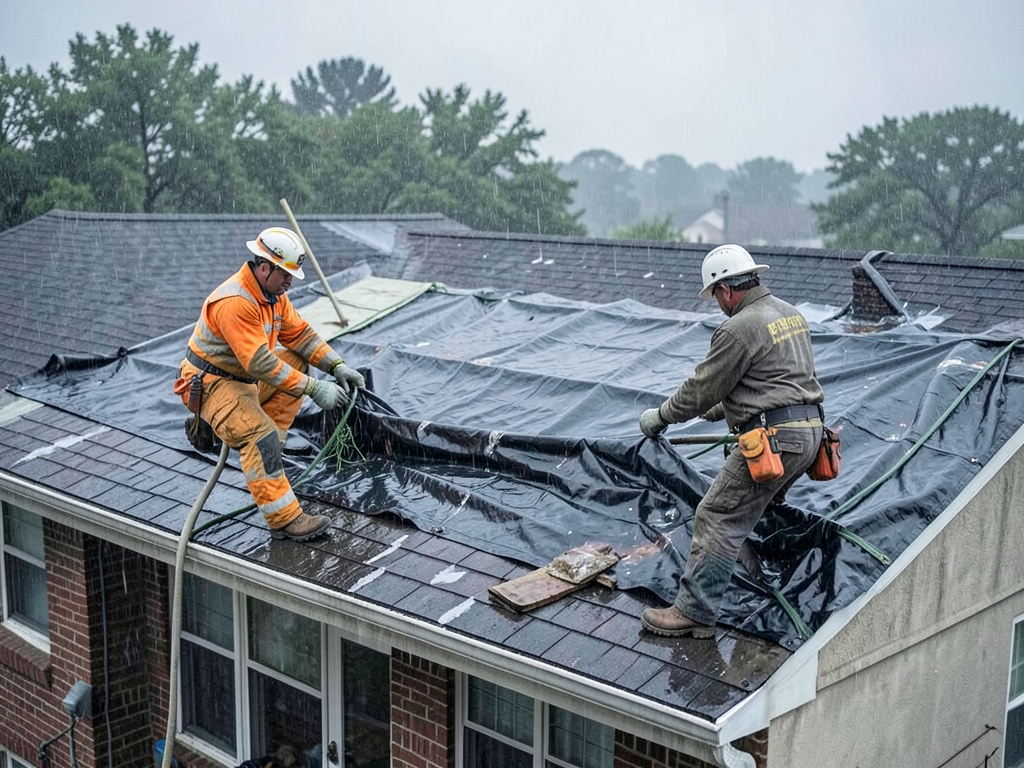
Emergency teams carry specialized equipment including heavy-duty tarps, moisture barriers, and temporary patching materials. They know how to work in challenging conditions, whether that’s high winds, darkness, or ongoing rain. The goal is always to stop water intrusion first, then address the underlying damage.
Insurance companies in Missouri typically require that you take reasonable steps to prevent further damage after a storm. This means emergency tarping isn’t just helpful – it’s often necessary to maintain your coverage. A reputable emergency roofer will document everything with photos and written reports that support your insurance claim.
Our Emergency Roofing Process
The emergency roofing process follows a specific sequence designed to minimize damage and maximize safety. First comes the immediate response, where a team arrives within 2-4 hours of your call, depending on weather conditions and current demand.
Step one involves safety assessment. Technicians check for electrical hazards, structural damage, and dangerous conditions before beginning any work. They’ll advise you if evacuation is necessary or if certain areas of your home should be avoided.
Step two is damage containment. This typically means applying heavy-duty tarps or shrink-wrap over the damaged area. Professional tarps are secured with specialized fasteners that won’t damage your roof further, and they’re angled to direct water away from the building.
Step three involves detailed documentation. Technicians take comprehensive photos from multiple angles, measure affected areas, and note specific damage types. This documentation becomes crucial for insurance adjusters who may not visit for several days after the storm.
Step four is the temporary repair. This might include sealing small holes, replacing missing flashing, or securing loose materials. The goal is to create a weather-tight barrier until permanent repairs can be scheduled. Who to Call for 24 Hour Roof Repairs Anywhere in St. Louis.
Step five involves insurance coordination. Your emergency roofer should provide detailed estimates, damage reports, and be available to meet with insurance adjusters. They understand the specific requirements of Missouri insurance policies and can help ensure you receive proper coverage.
St. Louis Weather & Common Roof Emergencies
St. Louis experiences some of the most severe weather patterns in the Midwest, creating unique challenges for homeowners. The region’s location in the Mississippi River Valley makes it particularly vulnerable to severe thunderstorms that can produce hail, high winds, and tornadoes.
Hail damage is especially common in St. Louis. When hailstones the size of golf balls or larger impact asphalt shingles, they can crack the protective granules and expose the underlying asphalt to UV damage. This type of damage often looks minor from the ground but can lead to significant leaks within months.
Wind uplift is another major concern. Missouri storms frequently produce gusts over 60 mph, which can tear off entire sections of roofing material. The problem is often worse in older neighborhoods like Soulard or Lafayette Square where many homes have reached the end of their roof’s lifespan.
Tree damage occurs when high winds or lightning cause branches to fall onto roofs. In established St. Louis neighborhoods with mature trees, this is a common emergency call. The damage often involves both the roof surface and underlying structure, requiring careful assessment to ensure no hidden damage exists.
Ice dam formation in winter creates another emergency scenario. When snow melts during the day and refreezes at night, it can back up under shingles and cause interior water damage. This is particularly problematic in homes with poor attic ventilation or those in the St. Louis Hills area where temperatures fluctuate dramatically.
According to the National Weather Service, the St. Louis metropolitan area experiences an average of 45 thunderstorm days per year, with about 8 days producing severe weather. This frequency makes emergency roof repair a necessary service for local homeowners. National Weather Service severe weather safety.
Insurance Claim Assistance
Navigating insurance claims after storm damage can be overwhelming, especially when you’re dealing with water damage inside your home. A good emergency roofer doesn’t just fix your roof – they help you understand and maximize your insurance coverage.
The insurance process typically begins with your emergency roofer providing a detailed damage assessment. This should include photos, measurements, and a written description of all damage. Many adjusters rely heavily on this documentation, especially if they can’t visit immediately due to widespread storm damage.
Missouri insurance law requires that claims be handled in good faith. This means your insurer must respond promptly to your claim and provide clear explanations for any denials or coverage limitations. If you disagree with an adjuster’s assessment, you have the right to request a second inspection or hire your own public adjuster.
Common coverage issues in St. Louis include depreciation, which reduces your payout based on your roof’s age, and matching requirements, where insurance will only pay to match existing undamaged materials. Understanding these factors upfront helps you make informed decisions about repairs versus replacement.
Your emergency roofer should be familiar with local insurance practices and common claim scenarios. They should explain your options clearly, including whether repairs or replacement makes more financial sense given your coverage limits and deductible.
Why Choose a Local St. Louis Roofer?
Local knowledge matters when it comes to emergency roof repair. A St. Louis-based contractor understands the specific challenges of our climate, building codes, and insurance landscape. They’re familiar with the architectural styles common in neighborhoods like Clayton, Webster Groves, and Chesterfield, and they know which materials perform best in our weather conditions.
Local roofers have established relationships with suppliers, insurance adjusters, and building inspectors. This network becomes invaluable during widespread storm events when resources are stretched thin. They can often source materials faster and coordinate with other contractors more effectively than out-of-town companies.
Community reputation matters. Local contractors depend on word-of-mouth referrals and repeat business from neighbors. They’re more likely to stand behind their work and provide the follow-up service that emergency repairs often require.
Response time is critical in emergencies. A local St. Louis roofer can typically arrive within hours, while out-of-town contractors might take a day or more to reach you. During severe weather events, this difference can mean the difference between minor damage and major water intrusion.
Local licensing and insurance requirements also matter. St. Louis County and City have specific regulations for roofing contractors, including permit requirements and inspection protocols. A local contractor stays current on these requirements and ensures all work complies with local codes.
Emergency Roof Repair Costs and Considerations
Emergency roof repair costs in St. Louis vary significantly based on damage extent, materials needed, and urgency. A basic tarping service might cost $200-500, while more complex emergency repairs could range from $1,000-5,000 or more.
Several factors affect emergency repair costs. The type of roofing material matters – asphalt shingles are generally less expensive to repair than slate, tile, or metal roofing. The extent of structural damage also impacts cost, as does the need for specialized equipment or safety measures.
Timing affects pricing. Emergency services during off-hours, weekends, or holidays typically cost more due to overtime pay and the need to mobilize crews quickly. However, the cost of emergency repair is usually much less than the potential water damage from delayed response.
Insurance coverage plays a major role in determining your out-of-pocket costs. Most homeowner policies cover storm damage, but you’ll typically pay a deductible. Some policies have separate wind and hail deductibles that are higher than standard deductibles.
Payment options vary by contractor. Many emergency roofers require payment upfront for materials and initial service, while others offer financing or work directly with insurance companies. Understanding payment terms before work begins prevents surprises later.
Safety Checklist for Homeowners
Before emergency crews arrive, there are several safety steps you should take. First, if you notice active water intrusion, move valuable items away from the affected area and place buckets under leaks to minimize damage.
Avoid the attic during storms or immediately after. Wet insulation, compromised electrical systems, and weakened structures create serious hazards. If you must check the attic, use a flashlight rather than flipping light switches.
Never attempt to climb onto your roof yourself. Wet surfaces, hidden damage, and high winds create extremely dangerous conditions. Professional roofers have the proper safety equipment and training to work in these conditions.
Document damage with photos before any temporary repairs are made. These images become important evidence for insurance claims and help your contractor understand the full extent of the damage.
Turn off HVAC systems if you suspect damage to roof-mounted equipment or if water is entering through vents. This prevents contaminated air from circulating through your home and protects equipment from water damage.
Check on elderly neighbors or those with mobility issues who might need assistance during storm emergencies. Community support becomes especially important when severe weather affects large areas.
Preventing Future Emergencies
While you can’t prevent severe weather, you can reduce your risk of emergency roof repairs through regular maintenance. Annual roof inspections can identify potential problems before they become emergencies.
Gutter maintenance is crucial in St. Louis, where heavy rains are common. Clean gutters prevent water backup that can damage fascia, soffits, and roof edges. Consider installing gutter guards if you have many trees near your home.
Tree trimming reduces the risk of branch damage during storms. Keep branches at least 10 feet from your roof, and remove any dead or dying trees that could fall during high winds.
Proper attic ventilation prevents ice dam formation and reduces moisture buildup that can damage roofing materials. Ensure your attic has adequate intake and exhaust ventilation appropriate for our climate.
Quality underlayment installation provides an extra layer of protection against wind-driven rain and ice dams. Consider upgrading to synthetic underlayment when replacing your roof for enhanced protection. High Quality Roof Replacements for Creve Coeur Properties.
Regular maintenance of roof-mounted equipment like HVAC units and solar panels ensures these installations don’t create water intrusion points. Check seals and flashing around all roof penetrations annually.
Frequently Asked Questions
How quickly should I call for emergency roof repair?
Call immediately when you notice active leaks, structural damage, or significant water intrusion. The longer you wait, the more extensive and expensive the damage becomes. Even small leaks can cause major problems within 24-48 hours.
Will my homeowner’s insurance cover emergency roof repairs?
Most policies cover storm damage, including emergency repairs needed to prevent further damage. However, coverage varies by policy and damage cause. Review your policy or contact your agent to understand your specific coverage and deductible amounts.
What should I do while waiting for the emergency crew to arrive?
Move valuable items away from affected areas, place buckets under active leaks, and document damage with photos. Avoid the attic and never attempt roof access yourself. If water is near electrical systems, turn off power to affected areas if safe to do so.
How can I tell if my roof damage is severe enough to require emergency service?
Active water intrusion, visible daylight through the roof, sagging ceilings, or structural damage all indicate emergency conditions. Even if damage seems minor, it’s better to err on the side of caution – water can travel along rafters and cause hidden damage.
Do emergency roofers work at night or during storms?
Many emergency roofers provide 24/7 service, though extreme conditions may delay response times. Safety is always the priority – crews won’t work in conditions that endanger their lives. Temporary measures like tarps can often be applied even during active storms.
How long do emergency repairs typically last?
Temporary emergency repairs are designed to last weeks to months, depending on weather conditions and damage extent. Permanent repairs should be scheduled as soon as possible after the emergency service. Your contractor should provide a timeline for follow-up work.
Call for Immediate Emergency Roof Repair
Don’t wait until water damage spreads through your home. When severe storms hit St. Louis and your roof is compromised, every minute matters. Our emergency response team is ready 24/7 to stop leaks, protect your property, and begin the repair process.
We understand the stress of dealing with storm damage, which is why we prioritize rapid response and clear communication throughout the repair process. Our technicians arrive prepared with the right equipment and materials to address your specific emergency situation.
Insurance claims can be complicated, but we’ve helped hundreds of St. Louis homeowners navigate the process successfully. We provide detailed documentation, meet with adjusters, and ensure you receive fair coverage for your repairs.
Whether you’re dealing with hail damage in Chesterfield, wind damage in Clayton, or tree damage in Webster Groves, we have the local experience and technical expertise to handle your emergency properly the first time.
Pick up the phone and call (314) 417-7774 before the next storm hits. Our emergency dispatch team is ready to respond to your call right now and get your roof protected before additional damage occurs.
Don’t let a small leak turn into a major disaster. Call (314) 417-7774 today for immediate emergency roof repair service anywhere in the St. Louis metro area.
{
“@context”: “https://schema.org”,
“@type”: “BlogPosting”,
“headline”: “Finding Emergency Roof Repair in St. Louis When a Storm Hits Hard”,
“description”: “24/7 emergency roof repair in St. Louis. Fast storm damage response, hail assessment, and insurance claim help. Call (314) 417-7774 for immediate service.”,
“wordCount”: 2494,
“datePublished”: “2026-02-14T15:49:00.000Z”,
“dateModified”: “2026-02-14T15:49:00.000Z”,
“inLanguage”: “en-US”,
“mainEntityOfPage”: {
“@type”: “WebPage”,
“@id”: “https://pioneerroofingstlouis.com”
},
“publisher”: {
“@type”: “LocalBusiness”,
“name”: “Pioneer Roofing St. Louis”,
“url”: “https://pioneerroofingstlouis.com”
},
“author”: {
“@type”: “Organization”,
“name”: “Pioneer Roofing St. Louis”,
“url”: “https://pioneerroofingstlouis.com”
},
“image”: {
“@type”: “ImageObject”,
“url”: “https://pioneerroofingstlouis.com/wp-content/uploads/2026/03/finding-emergency-roof-repair-in-st-louis-when-a-s-1.png”
}
}
{
“@context”: “https://schema.org”,
“@type”: “RoofingContractor”,
“name”: “Pioneer Roofing St. Louis”,
“url”: “https://pioneerroofingstlouis.com”,
“address”: {
“@type”: “PostalAddress”,
“addressLocality”: “St. Louis”
},
“areaServed”: {
“@type”: “City”,
“name”: “St. Louis”
}
}
{
“@context”: “https://schema.org”,
“@type”: “FAQPage”,
“mainEntity”: [
{
“@type”: “Question”,
“name”: “Why Choose a Local St. Louis Roofer?”,
“acceptedAnswer”: {
“@type”: “Answer”,
“text”: “Local knowledge matters when it comes to emergency roof repair. A St. Louis-based contractor understands the specific challenges of our climate, building codes, and insurance landscape. They’re familiar with the architectural styles common in neighborhoods like Clayton, Webster Groves, and Chesterfield, and they know which materials perform best in our weather conditions.”
}
},
{
“@type”: “Question”,
“name”: “How quickly should I call for emergency roof repair?”,
“acceptedAnswer”: {
“@type”: “Answer”,
“text”: “Call immediately when you notice active leaks, structural damage, or significant water intrusion. The longer you wait, the more extensive and expensive the damage becomes. Even small leaks can cause major problems within 24-48 hours.”
}
},
{
“@type”: “Question”,
“name”: “Will my homeowner’s insurance cover emergency roof repairs?”,
“acceptedAnswer”: {
“@type”: “Answer”,
“text”: “Most policies cover storm damage, including emergency repairs needed to prevent further damage. However, coverage varies by policy and damage cause. Review your policy or contact your agent to understand your specific coverage and deductible amounts.”
}
},
{
“@type”: “Question”,
“name”: “How can I tell if my roof damage is severe enough to require emergency service?”,
“acceptedAnswer”: {
“@type”: “Answer”,
“text”: “Active water intrusion, visible daylight through the roof, sagging ceilings, or structural damage all indicate emergency conditions. Even if damage seems minor, it’s better to err on the side of caution – water can travel along rafters and cause hidden damage.”
}
},
{
“@type”: “Question”,
“name”: “Do emergency roofers work at night or during storms?”,
“acceptedAnswer”: {
“@type”: “Answer”,
“text”: “Many emergency roofers provide 24/7 service, though extreme conditions may delay response times. Safety is always the priority – crews won’t work in conditions that endanger their lives. Temporary measures like tarps can often be applied even during active storms.”
}
},
{
“@type”: “Question”,
“name”: “How long do emergency repairs typically last?”,
“acceptedAnswer”: {
“@type”: “Answer”,
“text”: “Temporary emergency repairs are designed to last weeks to months, depending on weather conditions and damage extent. Permanent repairs should be scheduled as soon as possible after the emergency service. Your contractor should provide a timeline for follow-up work.”
}
}
]
}
{
“@context”: “https://schema.org”,
“@type”: “BreadcrumbList”,
“itemListElement”: [
{
“@type”: “ListItem”,
“position”: 1,
“name”: “Home”,
“item”: “https://pioneerroofingstlouis.com”
},
{
“@type”: “ListItem”,
“position”: 2,
“name”: “Blog”,
“item”: “https://pioneerroofingstlouis.com/blog”
},
{
“@type”: “ListItem”,
“position”: 3,
“name”: “Finding Emergency Roof Repair in St. Louis When a Storm Hits Hard”
}
]
}
{
“@context”: “https://schema.org”,
“@type”: “Service”,
“serviceType”: “Roofing”,
“provider”: {
“@type”: “LocalBusiness”,
“name”: “Pioneer Roofing St. Louis”,
“url”: “https://pioneerroofingstlouis.com”
},
“areaServed”: {
“@type”: “City”,
“name”: “St. Louis”
},
“description”: “24/7 emergency roof repair in St. Louis. Fast storm damage response, hail assessment, and insurance claim help. Call (314) 417-7774 for immediate service.”
}