
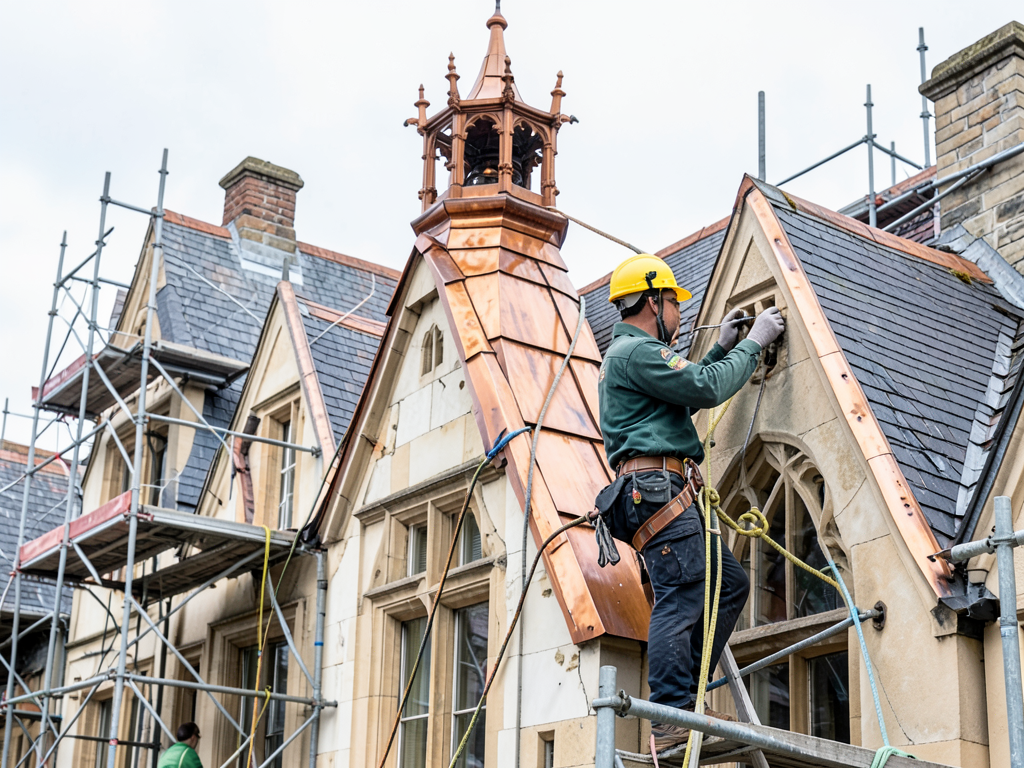
Restoring the Steep Gables and Decorative Turrets of McKinley Heights Victorian Roofs
Victorian homes in McKinley Heights feature steep gables and decorative turrets that require specialized restoration expertise. These architectural elements face unique challenges from St. Louis weather patterns and age-related deterioration. Understanding the specific needs of these historic structures ensures proper preservation and protection. St. Louis historic preservation guidelines.
Victorian architecture in McKinley Heights emerged during St. Louis’s rapid growth in the late 1800s. The neighborhood showcases Queen Anne and Italianate styles with their characteristic steep roof pitches and ornate detailing. These homes require careful restoration to maintain their historic character while meeting modern building standards.
The steep gables and decorative turrets of McKinley Heights Victorian homes face constant exposure to Missouri’s climate. Freeze-thaw cycles stress the materials while high winds test the structural integrity. Proper restoration addresses these challenges through specialized techniques and historically appropriate materials.
Understanding Victorian Roof Architecture in McKinley Heights
Victorian homes in McKinley Heights feature distinctive architectural elements that require expert restoration. The steep gables create dramatic rooflines while decorative turrets add visual interest and complexity. These elements demand specialized knowledge of historic construction methods and materials.
The Queen Anne style dominates many McKinley Heights streets with its asymmetrical facades and multiple roof planes. Italianate homes feature lower-pitched roofs with wide eaves and decorative brackets. Each style presents unique restoration challenges that generic roofing contractors cannot address properly. Reliable Roofing Services for Your Affton Home or Rental Property.
McKinley Heights Victorian roofs often incorporate slate tiles, wood shingles, or metal roofing systems. The decorative elements include finials, cresting, and ornate copper flashing. These materials require specific handling techniques to prevent damage during restoration work.
Common Victorian Roof Problems in St. Louis
Victorian roofs in McKinley Heights suffer from specific failure patterns related to age and climate. The steep pitches create drainage challenges while the ornate detailing traps moisture in vulnerable areas. Understanding these problems helps develop effective restoration strategies.
Box gutters represent a critical failure point in many Victorian homes. These built-in gutters become clogged with debris and deteriorate over time. The resulting water damage affects the fascia, soffits, and roof structure beneath the decorative elements.
Decorative turrets face particular challenges due to their height and exposure. Wind-driven rain penetrates flashing details while temperature extremes cause expansion and contraction. The ornate woodwork requires specialized treatment to prevent rot and insect damage.
Flashing around chimneys, dormers, and turrets often fails due to improper installation or material degradation. Copper flashing develops patina that can hide underlying corrosion. Lead flashing becomes brittle and cracks over time, allowing water infiltration.
Specialized Materials for Historic Victorian Roofing
Restoring Victorian roofs requires materials that match the original construction while providing modern durability. The selection process considers historical accuracy, local building codes, and long-term performance. Each material choice affects the roof’s appearance and functionality.
Slate, Clay Tile, and Decorative Wood Shingles
Natural slate remains the gold standard for Victorian roof restoration. Vermont slate offers exceptional durability with a 75 to 100-year lifespan when properly installed. The material’s weight requires structural evaluation before installation on older homes.
Clay tiles provide Mediterranean charm for Italianate Victorians. Modern clay tiles offer improved durability while maintaining traditional aesthetics. The interlocking design creates effective water shedding on steep pitches.
Wood shingles and shakes require careful selection for Victorian restoration. Eastern white cedar offers natural resistance to decay while providing authentic appearance. The material requires periodic maintenance to prevent premature deterioration.
Copper roofing and flashing develop natural patina that enhances Victorian character. The material’s longevity exceeds 50 years with minimal maintenance. Copper work requires specialized skills for proper installation and detailing.
Our Restoration Process: From Inspection to Historic Compliance
Victorian roof restoration follows a systematic process that ensures quality and compliance. The approach begins with thorough inspection and continues through material selection and installation. Each step addresses the unique challenges of historic preservation. High Quality Roof Replacements for Creve Coeur Properties.
Initial inspection identifies existing damage and potential problems. The evaluation examines structural integrity, material condition, and code compliance. Moisture testing reveals hidden damage within the roof assembly.
Material analysis determines appropriate replacement options. Salvageable materials undergo cleaning and repair. New materials match original specifications for color, texture, and installation method.
Structural reinforcement addresses weaknesses discovered during inspection. The work includes strengthening rafters, repairing decking, and improving ventilation. These improvements enhance the roof’s ability to support modern materials.
Navigating St. Louis Historic District Regulations
McKinley Heights falls under St. Louis historic district guidelines that govern exterior modifications. The Landmarks Association of St. Louis reviews restoration plans to ensure compliance with preservation standards. Understanding these requirements prevents costly delays and rework.
St. Louis Building Code Chapter 17 addresses historic preservation requirements. The code mandates specific materials and installation methods for visible exterior elements. Compliance documentation includes material specifications and installation details.
Permit applications require detailed drawings and material samples. The review process examines historical accuracy and neighborhood compatibility. Approval typically takes 30 to 45 days depending on complexity.
Work in historic districts requires licensed contractors familiar with preservation standards. The contractors must document all procedures and material sources. Regular inspections verify compliance throughout the restoration process.
Why Victorian Roofs Require Specialist Craftsmanship
Victorian roof restoration demands skills beyond standard roofing techniques. The steep pitches create safety challenges while the ornate detailing requires precision work. Specialist craftsmen understand these requirements and possess appropriate training and equipment.
Steep pitch work requires specialized fall protection systems. The 12:12 pitch common in Victorian gables exceeds standard roof safety equipment capabilities. Custom scaffolding and harness systems protect workers during restoration.
Ornate detailing demands woodworking skills comparable to fine furniture making. The decorative elements include hand-carved finials, turned posts, and custom moldings. These features require restoration rather than simple replacement.
Material matching requires knowledge of historic manufacturing processes. Modern slate differs from 19th-century products in color, texture, and thickness. Specialist suppliers provide authentic materials or create custom matches.
Integration of modern systems into historic structures requires creative solutions. Ventilation improvements, ice dam protection, and energy efficiency upgrades must remain invisible from street view. The work preserves historic character while meeting current standards.
View Our Recent Victorian Restorations in Lafayette Square and Soulard
Our restoration portfolio includes successful projects throughout St. Louis historic districts. Lafayette Square features Second Empire Victorians with mansard roofs requiring specialized restoration techniques. Soulard’s Italianate homes showcase decorative brackets and wide eaves that demand careful preservation.
Recent projects demonstrate our ability to handle complex Victorian restoration challenges. A Lafayette Square Second Empire required complete slate replacement while preserving original copper flashing. The work maintained historical accuracy while improving weather resistance.
Soulard restoration projects often involve decorative woodwork repair and replacement. The humid climate accelerates deterioration of exposed elements. Our treatments include wood consolidation, epoxy repair, and protective coatings.
McKinley Heights projects benefit from our experience in adjacent historic districts. The techniques and materials proven successful in Lafayette Square and Soulard apply directly to local Victorian restoration needs.
Victorian Roof Restoration Cost Factors
Victorian roof restoration costs vary based on several factors specific to these historic structures. The steep pitches increase labor requirements while ornate detailing demands more time for proper installation. Understanding these factors helps homeowners budget appropriately. Why Ladue Homeowners Trust These Specialized Roofing Contractors.
Steep pitch work requires additional safety equipment and slower installation rates. A 12:12 pitch roof takes approximately 30% longer to complete than a standard 6:12 pitch. The increased labor cost reflects these productivity differences.
Ornate detailing requires custom fabrication and specialized installation techniques. Decorative elements often cannot be replaced with standard products. Custom millwork and metal fabrication increase material and labor costs.
Historic compliance requirements add administrative overhead. Permit fees, review processes, and documentation requirements increase project costs. The benefits include preserved property value and neighborhood character.
Material selection significantly impacts restoration costs. Natural slate costs $15 to $25 per square foot installed compared to $5 to $8 for architectural asphalt shingles. The longevity difference often justifies the initial investment.
Maintaining Your Restored Victorian Roof
Proper maintenance extends the life of restored Victorian roofs and preserves their historic character. The maintenance schedule addresses specific vulnerabilities of steep pitches and ornate detailing. Regular care prevents minor problems from becoming major repairs. Who to Call for 24 Hour Roof Repairs Anywhere in St. Louis.
Annual inspections identify potential problems before they cause damage. The inspections examine flashing details, check for loose materials, and assess drainage systems. Professional inspections cost $200 to $400 but prevent costly repairs.
Gutter cleaning becomes critical for Victorian homes with box gutters. The built-in systems trap debris that causes overflow and water damage. Quarterly cleaning during fall prevents winter ice dam formation.
Decorative elements require periodic treatment to prevent deterioration. Wood finials and cresting need repainting every 5 to 7 years. Metal elements benefit from protective coatings that prevent corrosion.
Tree maintenance prevents damage from overhanging branches. The shade promotes moss and algae growth while falling branches can damage steep roof surfaces. Proper pruning maintains roof clearance and reduces debris accumulation.
Emergency Victorian Roof Repair Services
Victorian homes require immediate attention when roof damage occurs. The steep pitches and ornate detailing create unique emergency situations that demand specialized response. Quick action prevents extensive damage to historic interiors and structural elements.
Storm damage often affects Victorian roofs severely due to their height and exposure. High winds can lift slate tiles while hail damages delicate decorative elements. Emergency tarping protects the structure while permanent repairs are planned. Fixing Wind and Storm Damage Before It Ruins Your St. Louis Home.
Water infiltration through failed flashing requires immediate attention. The ornate details create multiple potential entry points for water. Emergency repairs focus on stopping active leaks while planning comprehensive restoration.
Structural damage from fallen trees or severe weather demands rapid response. The steep pitches complicate temporary repairs while ornate elements require careful handling. Our emergency services include 24/7 availability for Victorian homes.
Insurance claims for Victorian roof damage require specialized documentation. The historic nature of these structures affects claim valuation and repair requirements. Our experience with insurance processes ensures proper claim handling.
Victorian Roof Restoration Timeline
Victorian roof restoration projects follow specific timelines based on project scope and complexity. The steep pitches and ornate detailing require careful planning and execution. Understanding the timeline helps homeowners prepare for the restoration process.
Initial consultation and inspection typically require one to two days. The evaluation includes detailed measurements, material analysis, and damage assessment. The resulting proposal outlines scope, timeline, and costs.
Permit acquisition adds 30 to 45 days to the project timeline. Historic district reviews require additional documentation and approval steps. The process ensures compliance with preservation standards.
Material procurement affects project start dates. Specialty materials often require 8 to 12 weeks for delivery. The lead time allows for proper planning and scheduling of restoration work.
Restoration work duration depends on project complexity. A complete slate replacement on a Victorian home typically requires 3 to 4 weeks. The timeline includes removal of existing materials, structural repairs, and installation of new roofing.
Final inspection and cleanup complete the restoration process. The work includes final documentation, warranty registration, and homeowner orientation. The entire process from initial consultation to completion typically requires 4 to 6 months.
Energy Efficiency Improvements for Victorian Homes
Victorian roof restoration provides opportunities for energy efficiency improvements. The steep pitches and large attic spaces offer potential for insulation upgrades. Modern materials can enhance comfort while maintaining historic character.
Attic insulation becomes critical for Victorian homes with steep roof pitches. The limited space between rafters requires high-performance insulation materials. Spray foam insulation provides maximum R-value in minimal thickness.
Ventilation improvements prevent moisture problems while enhancing energy efficiency. The steep pitches often lack adequate airflow channels. Ridge vents and soffit vents create continuous ventilation paths.
Reflective roofing materials reduce heat gain in Victorian attics. Light-colored slate or specialized coatings reflect solar radiation. The improvements reduce cooling costs while preserving historic appearance.
Solar integration requires careful planning for Victorian homes. The steep pitches provide excellent solar exposure while maintaining historic character. Building-integrated photovoltaics offer electricity generation without visible panels.
Victorian Roof Restoration vs. Replacement
Victorian homeowners face decisions between restoration and complete replacement. The steep pitches and ornate detailing affect this decision significantly. Understanding the factors helps determine the most appropriate approach.
Restoration preserves historic character while addressing specific problems. The approach maintains original materials and details when possible. Restoration costs vary based on the extent of work required.
Complete replacement offers modern materials and installation methods. The approach may be necessary for severely deteriorated structures. Replacement provides opportunity for energy efficiency improvements.
Historical value influences the restoration versus replacement decision. Homes in historic districts often require restoration to maintain compliance. The neighborhood character and property values support preservation efforts.
Cost analysis compares long-term expenses of restoration versus replacement. Restoration may cost more initially but preserves irreplaceable historic elements. Replacement provides predictable costs but may reduce historic value.
Structural condition determines the feasibility of restoration. Severe damage to roof structure may necessitate replacement. Professional evaluation identifies the most appropriate approach for each situation.
Choosing the Right Victorian Roof Restoration Contractor
Victorian roof restoration requires specialized expertise beyond standard roofing skills. The steep pitches and ornate detailing demand specific experience and equipment. Selecting the right contractor ensures quality restoration and preservation.
Experience with historic preservation projects demonstrates contractor capability. The portfolio should include Victorian homes with similar architectural features. References from historic district projects provide insight into contractor performance.
Insurance coverage must address the unique risks of steep pitch work. The policy should include workers’ compensation for high-risk roofing activities. Liability coverage protects homeowners from potential damages.
Knowledge of historic district requirements proves contractor qualification. The contractor should understand permit processes and compliance standards. Experience with local landmarks associations demonstrates familiarity with preservation requirements.
Material sourcing capabilities affect project quality. The contractor should have relationships with specialty suppliers for historic materials. Access to authentic slate, copper, and decorative elements ensures proper restoration.
Safety protocols address the risks of steep pitch restoration. The contractor should demonstrate comprehensive fall protection systems and worker training. Safety records indicate commitment to worker protection and project quality.
Victorian Roof Restoration Warranty and Guarantees
Victorian roof restoration requires specific warranty considerations due to the historic nature of these structures. The steep pitches and ornate detailing create unique warranty challenges. Understanding warranty terms protects homeowner investments.
Material warranties cover defects in manufacturing and performance. Natural slate typically carries 50 to 100-year warranties from reputable manufacturers. The warranties require proper installation by certified contractors.
Workmanship warranties address installation quality and performance. Standard roofing warranties cover 5 to 10 years for labor. Victorian restoration projects may require extended warranties due to complexity.
Historic preservation warranties address compliance with district requirements. The warranties guarantee that restoration work meets preservation standards. Documentation proves compliance for future property transactions.
Maintenance agreements provide ongoing protection for restored roofs. The agreements include regular inspections and minor repairs. Preventive maintenance extends roof life and preserves historic character.
Insurance considerations affect warranty decisions. Some insurers offer premium discounts for certified restoration work. The documentation supports insurance claims and property valuations.
Victorian Roof Restoration Case Studies
Successful Victorian roof restoration projects demonstrate the value of specialized expertise. The steep pitches and ornate detailing create unique challenges that require creative solutions. Case studies illustrate approaches to common restoration problems.
A McKinley Heights Queen Anne required complete slate replacement while preserving decorative turrets. The project involved structural reinforcement, material matching, and custom flashing details. The restoration maintained historic character while improving weather resistance.
Soulard Italianate restoration addressed box gutter deterioration and decorative bracket repair. The work included copper gutter replacement, wood consolidation, and protective coating application. The project enhanced both function and appearance.
Lafayette Square Second Empire restoration involved mansard roof repair and copper flashing replacement. The steep lower roof pitch required specialized scaffolding and safety systems. The work preserved original materials while improving performance.
These projects demonstrate the importance of specialized knowledge and experience. The successful outcomes reflect understanding of Victorian architecture and historic preservation requirements.
Victorian Roof Restoration Investment Value
Victorian roof restoration represents significant investment in historic property preservation. The steep pitches and ornate detailing affect both cost and value. Understanding the investment value helps homeowners make informed decisions.
Property value appreciation often justifies restoration investment. Historic homes with well-maintained roofs command premium prices in the market. The restoration preserves architectural character that buyers value.
Energy efficiency improvements provide ongoing cost savings. Modern insulation and ventilation reduce heating and cooling expenses. The improvements enhance comfort while preserving historic character.
Insurance considerations affect long-term costs. Some insurers offer reduced premiums for certified restoration work. The documentation supports insurance claims and property valuations.
Maintenance costs vary based on material selection and installation quality. Natural slate requires minimal maintenance compared to wood shingles. The initial investment often reduces long-term maintenance expenses.
Historic district compliance protects neighborhood character and property values. The restoration maintains architectural standards that preserve community appeal. The investment supports both individual property and neighborhood value.
Frequently Asked Questions
How long does Victorian roof restoration typically take?
Victorian roof restoration projects typically require 3 to 4 weeks for the actual roofing work. However, the complete process from initial consultation to final inspection usually takes 4 to 6 months when including permit acquisition and material procurement.
What makes Victorian roof restoration more expensive than standard roofing?
Victorian roof restoration costs more due to steep pitches requiring specialized safety equipment, ornate detailing demanding custom fabrication, and historic compliance requirements adding administrative overhead. The materials like natural slate also cost more than standard asphalt shingles.
Can I use modern materials while maintaining historic appearance?
Yes, modern materials can replicate historic appearance while providing better performance. Synthetic slate offers authentic look with improved durability, and modern copper flashing provides traditional appearance with enhanced corrosion resistance. The key is selecting materials that match original specifications.
Do I need special permits for Victorian roof restoration?
Yes, Victorian homes in historic districts require permits from the Landmarks Association of St. Louis. The review process examines historical accuracy and neighborhood compatibility. Work without proper permits can result in fines and mandatory removal of non-compliant work.
How do I know if my Victorian roof needs restoration or replacement?
Professional inspection determines whether restoration or replacement is appropriate. Restoration is typically viable when structural elements remain sound and materials can be repaired or matched. Replacement becomes necessary when structural damage is severe or materials are beyond repair.
What maintenance does a restored Victorian roof require?
Restored Victorian roofs need annual professional inspections, quarterly gutter cleaning, and periodic treatment of decorative elements. Wood components require repainting every 5 to 7 years, while copper flashing develops protective patina naturally. Regular maintenance prevents minor issues from becoming major repairs.
Ready to Restore Your Victorian Roof
Victorian roof restoration requires specialized expertise that generic roofing contractors cannot provide. The steep gables, decorative turrets, and historic significance demand careful attention to detail and preservation standards. Our experience with McKinley Heights and surrounding historic districts ensures quality restoration that maintains your home’s character while providing modern protection.
The unique challenges of Victorian roof restoration include steep pitch safety requirements, ornate detailing restoration, and historic district compliance. Our specialized equipment and trained craftsmen handle these challenges effectively. We understand the importance of preserving architectural heritage while meeting current building standards.
Don’t trust your Victorian home to contractors unfamiliar with historic preservation requirements. Our experience with St. Louis landmarks associations and building codes ensures proper permitting and compliance. We source authentic materials and employ craftsmen skilled in traditional techniques.
Call (314) 417-7774 today to schedule your Victorian roof restoration consultation. Our specialists will evaluate your home’s specific needs and provide detailed recommendations for preserving its historic character. Protect your investment and maintain your home’s architectural significance with professional Victorian roof restoration.
Pick up the phone and call (314) 417-7774 before the next storm damages your historic roof. Our 24/7 emergency services address immediate problems while planning comprehensive restoration. Don’t wait until minor issues become major repairs that compromise your home’s structural integrity and historic value. For more information, visit National Park Service historic roofing materials guide.
{
“@context”: “https://schema.org”,
“@type”: “BlogPosting”,
“headline”: “Restoring the Steep Gables and Decorative Turrets of McKinley Heights Victorian Roofs”,
“description”: “Expert Victorian roof restoration in McKinley Heights St. Louis. Specialized in steep gables, decorative turrets, and historic preservation. Call (314) 417-7774 for consultation.”,
“wordCount”: 3355,
“datePublished”: “2026-05-17T07:01:00.000Z”,
“dateModified”: “2026-05-17T07:01:00.000Z”,
“inLanguage”: “en-US”,
“mainEntityOfPage”: {
“@type”: “WebPage”,
“@id”: “https://pioneerroofingstlouis.com”
},
“publisher”: {
“@type”: “LocalBusiness”,
“name”: “Pioneer Roofing St. Louis”,
“url”: “https://pioneerroofingstlouis.com”
},
“author”: {
“@type”: “Organization”,
“name”: “Pioneer Roofing St. Louis”,
“url”: “https://pioneerroofingstlouis.com”
},
“image”: {
“@type”: “ImageObject”,
“url”: “https://pioneerroofingstlouis.com/wp-content/uploads/2026/03/restoring-the-steep-gables-and-decorative-turrets-1.png”
}
}
{
“@context”: “https://schema.org”,
“@type”: “RoofingContractor”,
“name”: “Pioneer Roofing St. Louis”,
“url”: “https://pioneerroofingstlouis.com”,
“address”: {
“@type”: “PostalAddress”,
“addressLocality”: “St. Louis”
},
“areaServed”: {
“@type”: “City”,
“name”: “St. Louis”
}
}
{
“@context”: “https://schema.org”,
“@type”: “FAQPage”,
“mainEntity”: [
{
“@type”: “Question”,
“name”: “How long does Victorian roof restoration typically take?”,
“acceptedAnswer”: {
“@type”: “Answer”,
“text”: “Victorian roof restoration projects typically require 3 to 4 weeks for the actual roofing work. However, the complete process from initial consultation to final inspection usually takes 4 to 6 months when including permit acquisition and material procurement.”
}
},
{
“@type”: “Question”,
“name”: “What makes Victorian roof restoration more expensive than standard roofing?”,
“acceptedAnswer”: {
“@type”: “Answer”,
“text”: “Victorian roof restoration costs more due to steep pitches requiring specialized safety equipment, ornate detailing demanding custom fabrication, and historic compliance requirements adding administrative overhead. The materials like natural slate also cost more than standard asphalt shingles.”
}
},
{
“@type”: “Question”,
“name”: “Can I use modern materials while maintaining historic appearance?”,
“acceptedAnswer”: {
“@type”: “Answer”,
“text”: “Yes, modern materials can replicate historic appearance while providing better performance. Synthetic slate offers authentic look with improved durability, and modern copper flashing provides traditional appearance with enhanced corrosion resistance. The key is selecting materials that match original specifications.”
}
},
{
“@type”: “Question”,
“name”: “Do I need special permits for Victorian roof restoration?”,
“acceptedAnswer”: {
“@type”: “Answer”,
“text”: “Yes, Victorian homes in historic districts require permits from the Landmarks Association of St. Louis. The review process examines historical accuracy and neighborhood compatibility. Work without proper permits can result in fines and mandatory removal of non-compliant work.”
}
},
{
“@type”: “Question”,
“name”: “How do I know if my Victorian roof needs restoration or replacement?”,
“acceptedAnswer”: {
“@type”: “Answer”,
“text”: “Professional inspection determines whether restoration or replacement is appropriate. Restoration is typically viable when structural elements remain sound and materials can be repaired or matched. Replacement becomes necessary when structural damage is severe or materials are beyond repair.”
}
},
{
“@type”: “Question”,
“name”: “What maintenance does a restored Victorian roof require?”,
“acceptedAnswer”: {
“@type”: “Answer”,
“text”: “Restored Victorian roofs need annual professional inspections, quarterly gutter cleaning, and periodic treatment of decorative elements. Wood components require repainting every 5 to 7 years, while copper flashing develops protective patina naturally. Regular maintenance prevents minor issues from becoming major repairs.”
}
}
]
}
{
“@context”: “https://schema.org”,
“@type”: “BreadcrumbList”,
“itemListElement”: [
{
“@type”: “ListItem”,
“position”: 1,
“name”: “Home”,
“item”: “https://pioneerroofingstlouis.com”
},
{
“@type”: “ListItem”,
“position”: 2,
“name”: “Blog”,
“item”: “https://pioneerroofingstlouis.com/blog”
},
{
“@type”: “ListItem”,
“position”: 3,
“name”: “Restoring the Steep Gables and Decorative Turrets of McKinley Heights Victorian Roofs”
}
]
}
{
“@context”: “https://schema.org”,
“@type”: “Service”,
“serviceType”: “Roofing”,
“provider”: {
“@type”: “LocalBusiness”,
“name”: “Pioneer Roofing St. Louis”,
“url”: “https://pioneerroofingstlouis.com”
},
“areaServed”: {
“@type”: “City”,
“name”: “St. Louis”
},
“description”: “Expert Victorian roof restoration in McKinley Heights St. Louis. Specialized in steep gables, decorative turrets, and historic preservation. Call (314) 417-7774 for consultation.”
}