
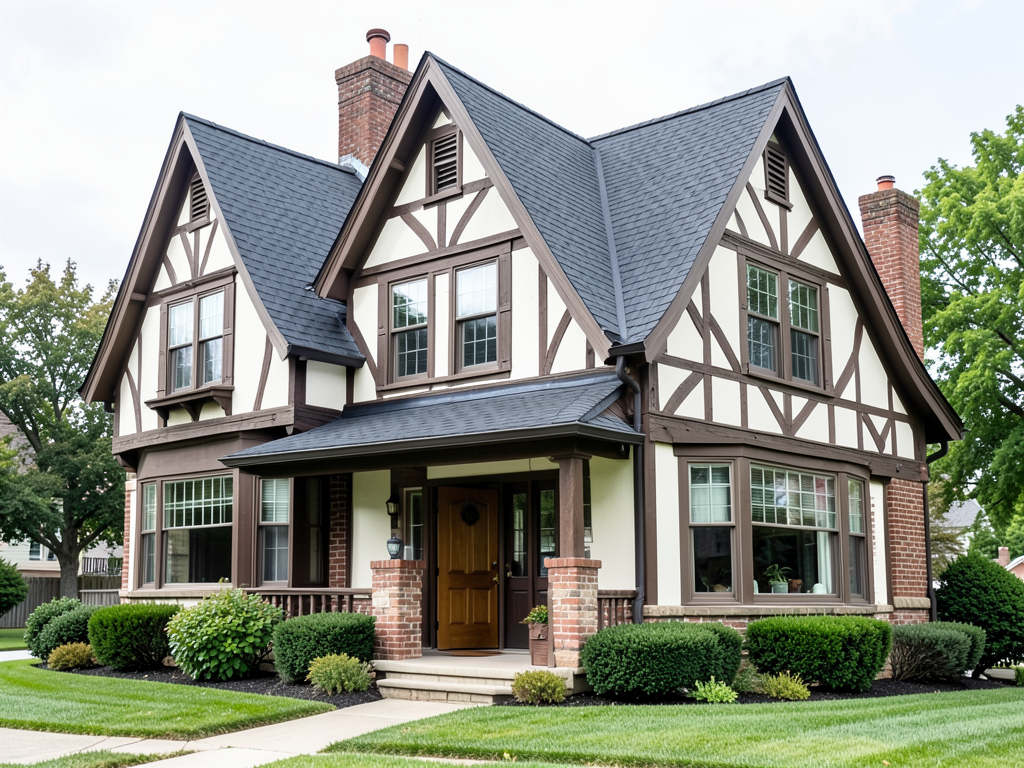
Finding the Right Shingles to Match the Timber Framing of Your Hampton Village Tudor
Your Hampton Village Tudor deserves roofing that honors its historic character while standing up to St. Louis weather. The steep gables, decorative half-timbering, and storybook charm of these homes require careful material selection to maintain authenticity and curb appeal. St. Louis County Historic Preservation Guidelines.
Designer asphalt shingles with slate or wood-shake textures work beautifully on Tudor-style homes, offering the classic look without the weight or cost of natural materials. Synthetic slate provides an even closer match to traditional roofing while delivering superior durability against Missouri’s hail storms and freeze-thaw cycles. Reliable Roofing Services for Your Affton Home or Rental Property.
Before selecting materials, consider your home’s specific Tudor features. The dramatic rooflines common in Hampton Village often include multiple intersecting gables, dormers, and valleys that require expert installation. The right shingle choice enhances these architectural elements while providing long-term protection.
Understanding Tudor Architecture in Hampton Village
Hampton Village features numerous Tudor Revival homes built during St. Louis’s early 20th-century building boom. These homes typically showcase steeply pitched gabled roofs, decorative half-timbering, and tall, narrow windows that create their distinctive storybook appearance.
The roof plays a crucial role in Tudor design, often covering multiple stories with complex intersecting planes. Many Hampton Village Tudors feature front-facing gables with slopes exceeding 10:12, creating dramatic rooflines that demand careful material selection and installation expertise.
Local building patterns show Tudor homes concentrated near Hampton Avenue and Eichelberger Street, where developers in the 1920s and 1930s embraced this English-inspired style. The neighborhood’s mature trees and established character make preserving architectural integrity especially important for homeowners. Why Ladue Homeowners Trust These Specialized Roofing Contractors.
Top Shingle Options for Tudor-Style Homes
Selecting the right shingle material requires balancing aesthetics, performance, and budget. Each option offers distinct advantages for Tudor homes in the St. Louis climate.
Designer Asphalt Shingles
Modern designer asphalt shingles replicate the appearance of natural slate or wood shakes while providing excellent weather resistance. These premium shingles feature enhanced dimensional profiles and rich color blends that complement Tudor architecture.
GAF Camelot II and CertainTeed Grand Manor represent top choices for Tudor homes. These products offer slate-like textures with color options including weathered wood, charcoal, and heather blend that work perfectly with traditional half-timbering. GAF Designer Shingle Options.
Installation requires specialized techniques for the steep pitches common on Tudor roofs. The enhanced thickness and weight of designer shingles provide better wind resistance in exposed areas near Hampton Park.
Synthetic Slate Roofing
Synthetic slate delivers the authentic appearance of natural slate without the structural challenges. Made from recycled materials, these tiles weigh significantly less than natural slate while maintaining the same visual depth and texture.
DaVinci Roofscapes and other synthetic slate manufacturers offer products specifically designed for historic applications. The tiles capture the subtle color variations and irregular edges that make natural slate so appealing on Tudor homes.
The lightweight nature of synthetic slate eliminates the need for additional roof framing reinforcement, making it ideal for older Tudor homes with original structural systems.
Natural Slate Roofing
Natural slate remains the gold standard for Tudor authenticity. The material’s natural cleft surface and subtle color variations create unmatched depth and character. However, natural slate requires structural reinforcement due to its significant weight.
Pennsylvania black slate and Vermont unfading green represent popular choices for Tudor applications. The material’s natural durability often exceeds 100 years, making it a lifetime investment for historic homes.
Installation demands specialized expertise and proper flashing techniques to prevent water infiltration at the complex intersections common in Tudor roof designs.
Color Selection for Tudor Aesthetics
Color choice significantly impacts how your Tudor home’s architectural features appear. The right palette enhances half-timbering and creates visual harmony with the surrounding landscape.
Charcoal and deep gray shingles provide excellent contrast against light-colored stucco or brick commonly found on Tudor homes. These darker tones make decorative half-timbering pop and create a sophisticated, timeless appearance.
Weathered wood and driftwood colors offer a warmer alternative that complements natural stone elements and mature landscaping. These mid-tone options work particularly well on homes with extensive half-timbering in darker stains.
Multi-color blends that mimic natural slate provide the most authentic appearance for high-end Tudor restorations. These products feature subtle color variations that catch light differently throughout the day, creating depth and visual interest.
Climate Considerations for St. Louis Tudors
St. Louis weather presents unique challenges for Tudor-style roofing. The region’s severe weather patterns require materials that can withstand multiple stress factors.
Hail resistance becomes critical in Hampton Village, where spring storms frequently produce golf ball-sized hail. Class 4 impact-rated shingles provide the highest level of protection and often qualify for insurance premium discounts. Fixing Wind and Storm Damage Before It Ruins Your St. Louis Home.
Humidity and moisture management are essential for Tudor homes with complex rooflines. The numerous valleys and dormers create potential water collection points that require proper underlayment and flashing systems.
Freeze-thaw cycles common in St. Louis can cause expansion and contraction in roofing materials. Synthetic slate and premium designer asphalt shingles accommodate these movements better than traditional materials.
Installation Challenges for Steep-Pitched Roofs
Tudor homes typically feature roof pitches between 10:12 and 12:12, creating installation challenges that require specialized equipment and techniques. The steep slopes demand enhanced safety protocols and experienced crews.
Roof deck preparation becomes critical on older Tudor homes where original sheathing may have deteriorated. Installing new plywood over existing boards provides a solid nailing surface while maintaining the home’s structural integrity.
Flashing details require particular attention around chimneys, dormers, and valleys. These transition points experience the highest water flow and need properly sized flashing to prevent leaks.
Ventilation systems must accommodate the complex roof geometry while meeting current building codes. Proper intake and exhaust ventilation prevent moisture buildup in the attic space below the steep roof planes.
Historic District Considerations
Many Tudor homes in Hampton Village fall within local historic districts or HOA guidelines that restrict exterior modifications. Understanding these requirements prevents costly compliance issues during your roofing project.
The St. Louis County Historic Preservation Commission oversees modifications to properties in designated districts. Their guidelines often specify approved materials, colors, and installation methods that maintain neighborhood character.
HOA covenants in Hampton Village may require approval for roofing changes, even for homes not in historic districts. These associations often maintain architectural standards that preserve the area’s distinctive Tudor character.
Working with contractors experienced in historic preservation ensures your project meets all regulatory requirements while achieving your aesthetic goals.
Cost Considerations and ROI
Premium roofing materials for Tudor homes represent a significant investment, but the returns extend beyond simple weather protection. The right roofing choice can dramatically impact your home’s market value and curb appeal.
Designer asphalt shingles typically cost 40-60% more than standard architectural shingles but provide superior aesthetics and longer warranties. The enhanced appearance often justifies the premium for Tudor homeowners.
Synthetic slate runs 2-3 times the cost of premium designer asphalt but offers the closest match to natural slate appearance without structural modifications. The material’s durability and low maintenance requirements provide long-term value.
Natural slate represents the highest initial investment but delivers unmatched longevity and authenticity. The material’s 75-100 year lifespan often makes it cost-effective over the home’s lifetime.
Maintenance Requirements for Tudor Roofs
The complex roof geometry of Tudor homes creates unique maintenance challenges. The numerous valleys, dormers, and intersecting planes require regular inspection to prevent water infiltration and material deterioration.
Annual inspections should focus on flashing details around chimneys, dormers, and valleys where leaks commonly develop. These transition points experience the highest water flow and are most vulnerable to weather damage.
Gutter maintenance becomes especially important for Tudor homes with steep pitches. The increased water velocity from high slopes can overwhelm undersized gutters, leading to overflow and foundation damage.
Algae and moss growth on north-facing slopes can accelerate material deterioration. Zinc or copper strips installed near roof peaks help prevent biological growth while maintaining the roof’s appearance.
Local Project Examples in Hampton Village
Several Tudor homes in Hampton Village have recently undergone roofing upgrades that demonstrate the impact of material selection on architectural authenticity. These projects showcase how different shingle types complement various Tudor design elements.
A 1930s Tudor near Eichelberger Street featured a complete roof replacement using GAF Camelot II in weathered wood. The multi-color blend enhanced the home’s half-timbering while providing superior weather resistance against St. Louis storms.
Another project on Winona Avenue involved synthetic slate installation that maintained the home’s historic character while eliminating the weight concerns of natural slate. The homeowner appreciated the authentic appearance without structural reinforcement costs.
These local examples demonstrate how material selection impacts both aesthetics and functionality for Tudor homes in the Hampton Village area.
Comparing Material Options
| Material Type | Cost Range | Lifespan | Weight | Best For |
|---|---|---|---|---|
| Designer Asphalt | $350-450 per square | 25-30 years | Medium | Budget-conscious homeowners |
| Synthetic Slate | $700-900 per square | 40-50 years | Light | Historic accuracy without weight |
| Natural Slate | $1,200-1,800 per square | 75-100 years | Heavy | Prestige restorations |
Frequently Asked Questions
What is the best shingle color for a Tudor-style home?
Charcoal, deep gray, and weathered wood colors work best for Tudor homes. These darker tones create contrast with light-colored stucco or brick and make decorative half-timbering stand out. Multi-color blends that mimic natural slate provide the most authentic appearance.
How much does it cost to replace a Tudor roof in Hampton Village?
Roof replacement costs for Tudor homes typically range from $15,000 to $45,000 depending on material selection and roof complexity. Designer asphalt shingles fall on the lower end while natural slate represents the highest investment. The steep pitches and complex geometry of Tudor roofs increase labor costs compared to standard installations.
Do I need special permits for roofing work on my Tudor home?
Yes, roofing work in Hampton Village typically requires building permits from St. Louis County. If your home is in a historic district, you may need additional approval from the Historic Preservation Commission. Some HOA communities also require architectural review before roofing projects begin.
How long does a roof replacement take on a Tudor-style home?
Most Tudor roof replacements take 5-10 days depending on weather conditions and roof complexity. The steep pitches and multiple intersecting planes require more time than standard roof installations. Synthetic slate may take slightly longer due to the individual tile installation process. High Quality Roof Replacements for Creve Coeur Properties.
Can I install heavier materials like natural slate on my older Tudor home?
Older Tudor homes may require structural reinforcement before installing heavy materials like natural slate. A structural engineer should evaluate your home’s framing capacity. Many homeowners choose synthetic slate as an alternative that provides the same appearance without weight concerns.
Making Your Final Decision
Selecting the right shingles for your Tudor home requires balancing multiple factors including budget, authenticity goals, and long-term maintenance considerations. The investment you make in material selection will impact your home’s appearance and protection for decades.
Consider your home’s specific Tudor features when making your selection. The scale and prominence of half-timbering, the color of exterior materials, and the surrounding landscape all influence which shingle option will look most appropriate.
Working with experienced contractors who understand Tudor architecture ensures proper installation techniques that protect your investment. The steep pitches and complex geometry of these homes demand specialized expertise that goes beyond standard roofing practices.
Your Tudor home represents a significant investment in both property and architectural heritage. Choosing the right roofing material honors that investment while providing the protection your family needs against St. Louis weather.
Next Steps for Your Tudor Roof Project
Ready to explore roofing options for your Hampton Village Tudor? The first step involves a professional inspection to assess your current roof condition and identify any structural considerations for your material selection.
During the inspection, your contractor should evaluate deck condition, ventilation requirements, and flashing details specific to your home’s design. This assessment forms the foundation for accurate material recommendations and cost estimates.
Don’t wait until visible damage appears to address your roofing needs. The complex geometry of Tudor homes makes early intervention crucial for preventing costly repairs to interior finishes and structural components. Who to Call for 24 Hour Roof Repairs Anywhere in St. Louis.
Call (314) 417-7774 today to schedule your Tudor roof inspection. Our team specializes in historic and architecturally significant homes throughout the St. Louis area, including Hampton Village. We’ll help you select the perfect roofing solution that honors your home’s Tudor character while providing modern protection against Missouri weather.
{
“@context”: “https://schema.org”,
“@type”: “BlogPosting”,
“headline”: “Finding the Right Shingles to Match the Timber Framing of Your Hampton Village Tudor”,
“description”: “Discover the perfect shingle options for your Hampton Village Tudor home. Learn about designer asphalt, synthetic slate, and natural slate roofing that complement historic architecture.”,
“wordCount”: 2084,
“datePublished”: “2026-06-06T10:38:00.000Z”,
“dateModified”: “2026-06-06T10:38:00.000Z”,
“inLanguage”: “en-US”,
“mainEntityOfPage”: {
“@type”: “WebPage”,
“@id”: “https://pioneerroofingstlouis.com”
},
“publisher”: {
“@type”: “LocalBusiness”,
“name”: “Pioneer Roofing St. Louis”,
“url”: “https://pioneerroofingstlouis.com”
},
“author”: {
“@type”: “Organization”,
“name”: “Pioneer Roofing St. Louis”,
“url”: “https://pioneerroofingstlouis.com”
},
“image”: {
“@type”: “ImageObject”,
“url”: “https://pioneerroofingstlouis.com/wp-content/uploads/2026/03/finding-the-right-shingles-to-match-the-timber-fra-1.png”
}
}
{
“@context”: “https://schema.org”,
“@type”: “RoofingContractor”,
“name”: “Pioneer Roofing St. Louis”,
“url”: “https://pioneerroofingstlouis.com”,
“address”: {
“@type”: “PostalAddress”,
“addressLocality”: “St. Louis”
},
“areaServed”: {
“@type”: “City”,
“name”: “St. Louis”
}
}
{
“@context”: “https://schema.org”,
“@type”: “FAQPage”,
“mainEntity”: [
{
“@type”: “Question”,
“name”: “What is the best shingle color for a Tudor-style home?”,
“acceptedAnswer”: {
“@type”: “Answer”,
“text”: “Charcoal, deep gray, and weathered wood colors work best for Tudor homes. These darker tones create contrast with light-colored stucco or brick and make decorative half-timbering stand out. Multi-color blends that mimic natural slate provide the most authentic appearance.”
}
},
{
“@type”: “Question”,
“name”: “How much does it cost to replace a Tudor roof in Hampton Village?”,
“acceptedAnswer”: {
“@type”: “Answer”,
“text”: “Roof replacement costs for Tudor homes typically range from $15,000 to $45,000 depending on material selection and roof complexity. Designer asphalt shingles fall on the lower end while natural slate represents the highest investment. The steep pitches and complex geometry of Tudor roofs increase labor costs compared to standard installations.”
}
},
{
“@type”: “Question”,
“name”: “Do I need special permits for roofing work on my Tudor home?”,
“acceptedAnswer”: {
“@type”: “Answer”,
“text”: “Yes, roofing work in Hampton Village typically requires building permits from St. Louis County. If your home is in a historic district, you may need additional approval from the Historic Preservation Commission. Some HOA communities also require architectural review before roofing projects begin.”
}
},
{
“@type”: “Question”,
“name”: “How long does a roof replacement take on a Tudor-style home?”,
“acceptedAnswer”: {
“@type”: “Answer”,
“text”: “Most Tudor roof replacements take 5-10 days depending on weather conditions and roof complexity. The steep pitches and multiple intersecting planes require more time than standard roof installations. Synthetic slate may take slightly longer due to the individual tile installation process. High Quality Roof Replacements for Creve Coeur Properties.”
}
},
{
“@type”: “Question”,
“name”: “Can I install heavier materials like natural slate on my older Tudor home?”,
“acceptedAnswer”: {
“@type”: “Answer”,
“text”: “Older Tudor homes may require structural reinforcement before installing heavy materials like natural slate. A structural engineer should evaluate your home’s framing capacity. Many homeowners choose synthetic slate as an alternative that provides the same appearance without weight concerns.”
}
}
]
}
{
“@context”: “https://schema.org”,
“@type”: “BreadcrumbList”,
“itemListElement”: [
{
“@type”: “ListItem”,
“position”: 1,
“name”: “Home”,
“item”: “https://pioneerroofingstlouis.com”
},
{
“@type”: “ListItem”,
“position”: 2,
“name”: “Blog”,
“item”: “https://pioneerroofingstlouis.com/blog”
},
{
“@type”: “ListItem”,
“position”: 3,
“name”: “Finding the Right Shingles to Match the Timber Framing of Your Hampton Village Tudor”
}
]
}
{
“@context”: “https://schema.org”,
“@type”: “Service”,
“serviceType”: “Roofing”,
“provider”: {
“@type”: “LocalBusiness”,
“name”: “Pioneer Roofing St. Louis”,
“url”: “https://pioneerroofingstlouis.com”
},
“areaServed”: {
“@type”: “City”,
“name”: “St. Louis”
},
“description”: “Discover the perfect shingle options for your Hampton Village Tudor home. Learn about designer asphalt, synthetic slate, and natural slate roofing that complement historic architecture.”
}