
Comparing Synthetic Slate and Natural Stone for Frontenac Luxury Homes
Frontenac homeowners seeking a slate roof face a critical decision: invest in heavy natural stone or choose modern synthetic alternatives. The choice impacts your home’s appearance, structural requirements, long-term maintenance, and insurance costs. This guide breaks down everything Frontenac residents need to know about both options.
The Luxury of Natural Slate without the Weight
Natural slate delivers unmatched authenticity with its quarried stone texture and subtle color variations. Each 1/4-inch thick tile comes from metamorphic rock deposits and can last 75-100 years when properly installed. The material’s density creates a distinctive sound during rainfall and develops a unique patina over decades.
However natural slate weighs 800-1,500 pounds per square (100 square feet). This weight requires reinforced roof decking and often structural engineering approval from Frontenac’s Architectural Review Board. Homes built before 1980 may need additional support beams to handle the load safely. Choosing the Best Architectural Shingles for Your Eureka Wooded Lot.
Synthetic slate eliminates these structural concerns while maintaining visual appeal. Made from polymer-based composites these tiles weigh just 200-300 pounds per square. The material resists St. Louis’s freeze-thaw cycles better than natural stone since it won’t crack from water absorption.
Modern manufacturing creates synthetic tiles with Class 4 impact ratings matching Class A fire resistance. This means they withstand hail storms that frequently damage traditional asphalt shingles in Frontenac’s 63131 zip code area. Fixing Wind and Storm Damage Before It Ruins Your St. Louis Home.
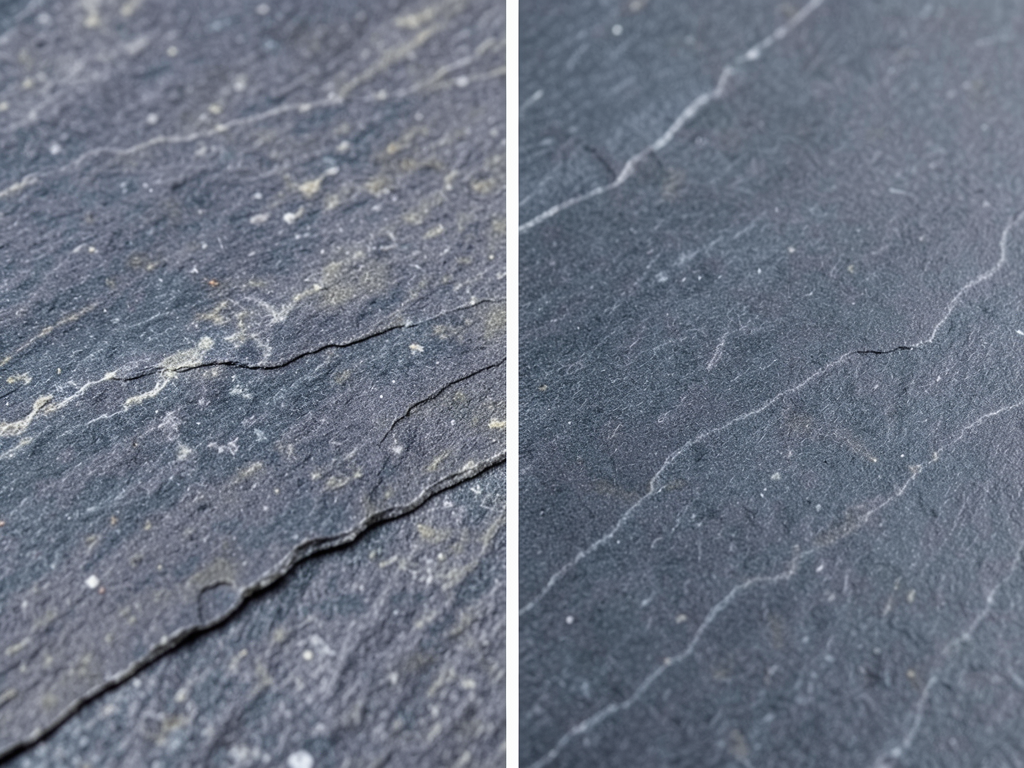
A close-up comparison showing natural slate’s quarried texture versus synthetic slate’s uniform polymer surface under magnification.
Frontenac Architectural Standards and Synthetic Slate
Frontenac’s Architectural Review Board requires detailed material submissions for any roofing project. Natural slate needs documentation proving stone origin and certification of structural capacity. Synthetic materials must demonstrate color stability and fade resistance over 20+ years of Missouri sun exposure. Reliable Roofing Services for Your Affton Home or Rental Property.
The ARB specifically evaluates how materials age on Frontenac’s historic properties. Natural slate develops a chalky surface layer that many residents find desirable. Synthetic options use UV stabilizers to maintain color consistency but may lack the authentic weathering pattern.
Both materials must meet St. Louis County’s International Residential Code adaptations for ice dam protection. This requires self-adhering underlayment extending 24 inches beyond interior walls in areas with average January temperatures below 25°F.
Synthetic slate often gains faster approval since it eliminates weight-related structural concerns. The lighter material reduces engineering review time from 4-6 weeks to 1-2 weeks for ARB applications.
Performance in St. Louis Weather
Missouri’s climate creates unique challenges for roofing materials. Frontenac experiences 41 inches of annual rainfall concentrated in spring and summer months. Temperatures range from -5°F in winter to 95°F in summer creating expansion and contraction stress. How to Navigate a Roofing Insurance Claim After a St. Louis Hail Storm.
Natural slate handles moisture well but absorbs 0.4% of its weight in water. This absorption combined with freezing temperatures causes microfractures over time. The material’s brittleness means falling branches during ice storms often require individual tile replacement.
Synthetic slate’s polymer composition resists water absorption completely. The material maintains flexibility at temperatures as low as -40°F preventing the freeze-thaw damage that plagues natural stone. Laboratory testing shows synthetic tiles surviving 20,000 thermal cycles compared to natural slate’s typical 5,000-7,000 cycles. Hail Damage Assessment.
Hail resistance differs significantly between materials. Natural slate’s Mohs hardness of 6.5 provides good scratch resistance but the material chips easily under impact. Synthetic Class 4 rated tiles withstand 2-inch steel balls dropped from 20 feet without damage.
Wind performance depends on installation method rather than material. Both options achieve 110+ mph wind ratings when installed per manufacturer specifications with proper fastening patterns.
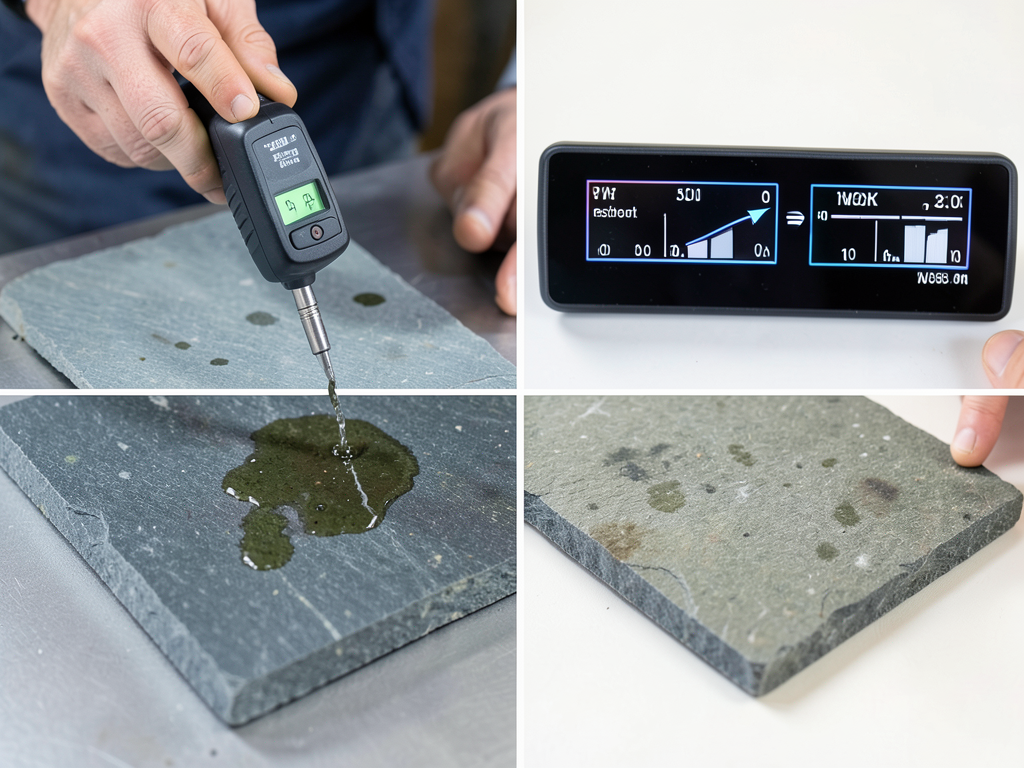
A technician using a moisture meter to test synthetic slate’s water resistance compared to natural slate’s absorption rate.
Our Installation Process
Installing synthetic slate requires specialized techniques different from traditional roofing. The lighter weight allows installation over existing asphalt shingles in many cases, reducing tear-off costs and landfill waste.
Our process begins with structural assessment. We verify roof deck integrity and identify any areas needing reinforcement. For synthetic installations, we often find existing structures adequate without modifications.
Next comes underlayment selection. Synthetic slate installations use synthetic underlayment rather than traditional felt paper. This provides better traction for installers and superior moisture protection.
Tile layout follows manufacturer-specific patterns. Unlike natural slate’s random variations, synthetic tiles install in repeating patterns that require precise measurement. We use laser levels to ensure straight courses and proper headlap overlap.
Flashing installation proves critical for both materials. We use copper flashing with lead-coated edges for synthetic slate to prevent galvanic corrosion. The lighter material requires different fastening patterns than natural stone.
Final inspection includes impact testing on sample areas and moisture barrier verification. We document installation per Frontenac building codes and provide warranty registration directly to manufacturers.
Synthetic vs. Natural Slate: A Comparison
| Feature | Natural Slate | Synthetic Slate |
|---|---|---|
| Weight per Square | 800-1,500 lbs | 200-300 lbs |
| Lifespan | 75-100 years | 40-50 years |
| Initial Cost | $1,500-2,500 per square | $800-1,200 per square |
| Maintenance | Replace cracked tiles | Wipe clean annually |
| Hail Resistance | Chipping likely | Class 4 rated |
| Installation Time | 2-3 weeks | 1-2 weeks |
| Structural Requirements | Often required | Rarely needed |
Recent Frontenac Projects
We completed a synthetic slate installation on a 6,000-square-foot French Country home near Conway Road in early 2026. The homeowners chose Bellaforte synthetic slate in Weathered Cedar to match their existing stone facade. The project required no structural modifications and finished in 8 days versus the 3 weeks estimated for natural slate.
Another project on a historic property along Lindbergh Boulevard involved replacing damaged natural slate with matching quarried stone. The 1920s structure required engineered support beams costing $8,000 before installation could begin. Total project duration exceeded 4 weeks due to structural work.
A recent Town and Country estate chose synthetic slate for its energy efficiency. The polymer tiles reflect 15% more solar radiation than natural stone, reducing cooling costs by approximately $200 annually in Missouri’s climate.
Environmental Impact and Sustainability
Natural slate mining creates significant environmental impact. Quarrying operations in Vermont and Pennsylvania remove entire hillsides and require diesel-powered equipment. Transporting heavy stone across the country adds substantial carbon emissions.
Synthetic slate production uses recycled materials including rubber and plastic polymers. Manufacturing occurs in Midwest facilities reducing transportation distances. The lighter weight cuts fuel consumption during delivery by 70% compared to natural stone.
At end-of-life, synthetic tiles contain recyclable materials while natural slate typically goes to landfills. Some synthetic manufacturers offer take-back programs for old tiles.
Energy efficiency differs between materials. Natural slate’s dark colors absorb heat, increasing cooling loads in summer. Light-colored synthetic options reflect solar radiation, potentially qualifying for energy efficiency tax credits.
Water runoff quality shows minimal differences. Both materials meet EPA requirements for non-toxic runoff, though synthetic tiles may release trace polymers during initial weathering. EPA guidelines for sustainable building materials.
Making the Right Choice for Your Frontenac Home
Choose natural slate if you prioritize authenticity and plan to own your home for 50+ years. The material’s proven longevity and unique aging characteristics appeal to homeowners who value traditional craftsmanship.
Select synthetic slate when you need faster installation, lower structural costs, or superior weather resistance. The material works well for homes with existing weight limitations or those in hail-prone areas.
Consider your home’s architectural style. Natural slate complements historic properties and traditional designs. Synthetic options suit contemporary homes and those with mixed material facades.
Budget factors extend beyond initial costs. Natural slate’s higher installation costs and potential structural requirements often exceed synthetic’s premium price. However natural slate may increase resale value more significantly in Frontenac’s luxury market.
Insurance implications vary by material. Some carriers offer premium discounts for impact-resistant synthetic roofing. Others require engineering certification for natural slate installations.
A technician performing the screwdriver test to check synthetic slate’s flexibility compared to natural slate’s brittleness in cold conditions.
Frequently Asked Questions
Does synthetic slate look fake compared to natural stone?
Modern synthetic slate uses advanced molding techniques to replicate natural stone’s texture and color variations. From street level most people cannot distinguish between materials. Close inspection reveals synthetic’s more uniform thickness and consistent coloring.
How long does synthetic slate last in Missouri weather?
Quality synthetic slate typically lasts 40-50 years in Missouri’s climate. The material’s polymer composition resists UV damage and thermal cycling better than many natural materials. Most manufacturers offer 50-year warranties on premium products.
Can I install synthetic slate over my existing roof?
Synthetic slate’s light weight often allows installation over existing asphalt shingles, eliminating tear-off costs. However local codes and manufacturer warranties may require complete removal. We assess each structure individually to determine the best approach.
What maintenance does synthetic slate require?
Synthetic slate needs minimal maintenance beyond annual debris removal. The material resists moss and algae growth better than natural stone. Impact damage remains the primary concern, though Class 4 rated products withstand most hail events.
How does synthetic slate affect home value?
Synthetic slate typically recovers 60-80% of installation costs in home value, similar to natural slate. The material’s durability and energy efficiency appeal to buyers. Some luxury markets show slight preference for natural materials, though quality synthetic products perform well in appraisals.
Call (314) 417-7774 today to schedule your inspection. Our synthetic slate specialists will evaluate your Frontenac home’s specific needs and provide detailed cost comparisons for both material options.
Pick up the phone and call (314) 417-7774 before the next storm hits. Whether you choose natural or synthetic slate, proper installation makes the difference between a roof that lasts 10 years and one that protects your home for generations. For more information, visit ASTM standards for asphalt shingles.
{
“@context”: “https://schema.org”,
“@type”: “BlogPosting”,
“headline”: “Comparing Synthetic Slate and Natural Stone for Frontenac Luxury Homes”,
“description”: “Discover the key differences between synthetic slate and natural stone roofing for Frontenac luxury homes. Learn about durability, cost, weight, and local building requirements.”,
“wordCount”: 1616,
“datePublished”: “2026-03-19T09:38:00.000Z”,
“dateModified”: “2026-03-19T09:38:00.000Z”,
“inLanguage”: “en-US”,
“mainEntityOfPage”: {
“@type”: “WebPage”,
“@id”: “https://pioneerroofingstlouis.com”
},
“publisher”: {
“@type”: “LocalBusiness”,
“name”: “Pioneer Roofing St. Louis”,
“url”: “https://pioneerroofingstlouis.com”
},
“author”: {
“@type”: “Organization”,
“name”: “Pioneer Roofing St. Louis”,
“url”: “https://pioneerroofingstlouis.com”
},
“image”: {
“@type”: “ImageObject”,
“url”: “https://pioneerroofingstlouis.com/wp-content/uploads/2026/03/comparing-synthetic-slate-and-natural-stone-for-fr-1.png”
}
}
{
“@context”: “https://schema.org”,
“@type”: “RoofingContractor”,
“name”: “Pioneer Roofing St. Louis”,
“url”: “https://pioneerroofingstlouis.com”,
“address”: {
“@type”: “PostalAddress”,
“addressLocality”: “St. Louis”
},
“areaServed”: {
“@type”: “City”,
“name”: “St. Louis”
}
}
{
“@context”: “https://schema.org”,
“@type”: “FAQPage”,
“mainEntity”: [
{
“@type”: “Question”,
“name”: “Does synthetic slate look fake compared to natural stone?”,
“acceptedAnswer”: {
“@type”: “Answer”,
“text”: “Modern synthetic slate uses advanced molding techniques to replicate natural stone’s texture and color variations. From street level most people cannot distinguish between materials. Close inspection reveals synthetic’s more uniform thickness and consistent coloring.”
}
},
{
“@type”: “Question”,
“name”: “How long does synthetic slate last in Missouri weather?”,
“acceptedAnswer”: {
“@type”: “Answer”,
“text”: “Quality synthetic slate typically lasts 40-50 years in Missouri’s climate. The material’s polymer composition resists UV damage and thermal cycling better than many natural materials. Most manufacturers offer 50-year warranties on premium products.”
}
},
{
“@type”: “Question”,
“name”: “What maintenance does synthetic slate require?”,
“acceptedAnswer”: {
“@type”: “Answer”,
“text”: “Synthetic slate needs minimal maintenance beyond annual debris removal. The material resists moss and algae growth better than natural stone. Impact damage remains the primary concern, though Class 4 rated products withstand most hail events.”
}
},
{
“@type”: “Question”,
“name”: “How does synthetic slate affect home value?”,
“acceptedAnswer”: {
“@type”: “Answer”,
“text”: “Synthetic slate typically recovers 60-80% of installation costs in home value, similar to natural slate. The material’s durability and energy efficiency appeal to buyers. Some luxury markets show slight preference for natural materials, though quality synthetic products perform well in appraisals.”
}
}
]
}
{
“@context”: “https://schema.org”,
“@type”: “BreadcrumbList”,
“itemListElement”: [
{
“@type”: “ListItem”,
“position”: 1,
“name”: “Home”,
“item”: “https://pioneerroofingstlouis.com”
},
{
“@type”: “ListItem”,
“position”: 2,
“name”: “Blog”,
“item”: “https://pioneerroofingstlouis.com/blog”
},
{
“@type”: “ListItem”,
“position”: 3,
“name”: “Comparing Synthetic Slate and Natural Stone for Frontenac Luxury Homes”
}
]
}
{
“@context”: “https://schema.org”,
“@type”: “Service”,
“serviceType”: “Roofing”,
“provider”: {
“@type”: “LocalBusiness”,
“name”: “Pioneer Roofing St. Louis”,
“url”: “https://pioneerroofingstlouis.com”
},
“areaServed”: {
“@type”: “City”,
“name”: “St. Louis”
},
“description”: “Discover the key differences between synthetic slate and natural stone roofing for Frontenac luxury homes. Learn about durability, cost, weight, and local building requirements.”
}