
How to Trim Your Trees to Protect Your Roof Without Ruining Your Landscaping in Glendale
Your mature oak trees provide beautiful shade for your Glendale home but those same branches can cause thousands of dollars in roof damage if left unchecked. Tree trimming for roof protection requires balancing tree health with home safety. This guide shows you exactly how to trim trees near your roof without destroying your landscaping investment.
Glendale’s combination of mature silver maples and red oaks creates unique challenges for homeowners. These trees grow quickly and their branches often extend over rooflines. When branches rub against shingles during wind storms they wear away the protective granules. This exposes your roof to UV damage and accelerates aging. The moisture trapped by overhanging branches also creates perfect conditions for moss and algae growth which can lead to wood rot. Fixing Wind and Storm Damage Before It Ruins Your St. Louis Home.
The solution is strategic trimming that maintains tree health while protecting your roof. You need to understand proper cutting techniques branch collar preservation and the right timing for pruning different tree species. This article covers everything from identifying high-risk branches to understanding when professional help is necessary.
The Hidden Dangers of Overhanging Branches
Overhanging tree branches create multiple risks for your roof beyond simple physical contact. During summer thunderstorms Glendale’s mature trees can drop heavy limbs onto your roof causing immediate structural damage. Even smaller branches scraping across shingles during wind events gradually wear away the protective surface layer.
Squirrels and raccoons use tree branches as highways onto your roof. Once on the roof they can damage flashing around chimneys and vents. They may also chew through roofing materials to access your attic. The accumulated leaves and twigs from overhanging branches clog gutters creating ice dams in winter that force water under shingles. Reliable Roofing Services for Your Affton Home or Rental Property.
Moisture retention is perhaps the biggest threat. Branches that touch or come within a few feet of your roof trap humidity against the surface. This constant moisture exposure promotes algae growth which appears as black streaks on shingles. Over time this leads to wood rot in roof decking and fascia boards.
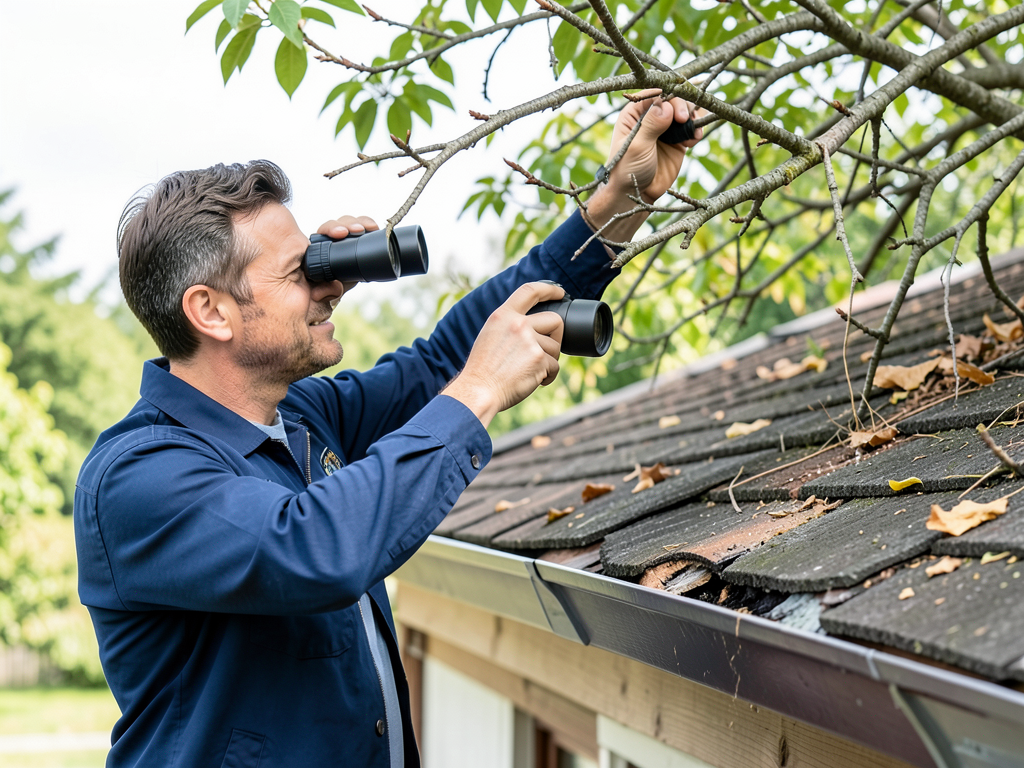
A technician uses binoculars to inspect tree branches overhanging a roof showing exact contact points and damage indicators.
St. Louis Weather and Tree Risks
Glendale experiences severe weather patterns that increase tree-related roof risks. Summer thunderstorms with winds exceeding 60 mph are common from May through September. These storms often bring hail that weakens tree limbs making them more likely to break and fall on your roof.
Winter ice storms create particularly dangerous conditions. Ice accumulation on tree branches adds tremendous weight. A single branch can gain hundreds of pounds of ice weight causing it to snap and crash through your roof. The freeze-thaw cycles common in Glendale also cause branches to become brittle and more prone to breaking.
High humidity levels throughout the growing season promote rapid tree growth. Silver maples in particular can grow several feet per year extending their reach toward your roof. This accelerated growth means annual inspections are necessary to identify branches that have grown too close to your home.
According to the National Weather Service St. Louis County experiences an average of 10 severe thunderstorm days per year. These storms frequently produce wind gusts strong enough to break weakened tree limbs. The combination of mature trees and severe weather makes proactive tree management essential for Glendale homeowners. National Weather Service.
The 6-Foot Rule: How Far Should Trees Be From Your Roof?
Industry experts recommend maintaining at least six feet of clearance between tree branches and your roof. This distance provides adequate protection while allowing trees to maintain their natural shape and health. Six feet prevents branches from touching the roof during normal wind conditions while still providing shade benefits.
Different tree species require different clearance distances. Fast-growing silver maples may need eight feet of clearance due to their brittle wood and rapid growth rate. Slower growing oaks can often be maintained at six feet without compromising their health or appearance.
Branch diameter also affects clearance requirements. Large branches over six inches in diameter should maintain greater distance from your roof. These heavy branches can cause significant damage if they break and fall. Smaller branches under two inches can sometimes be maintained at closer distances if properly secured.
Consider the tree’s age and health when determining clearance. Older trees with signs of decay or disease may require additional clearance to account for potential limb failure. Trees showing signs of root damage from construction or soil compaction are also at higher risk of branch drop.
A before and after comparison showing proper branch clearance with six feet of space between trimmed branches and roof edge.
Identifying High-Risk Trees on Your Property
Not all trees pose equal risk to your roof. Certain species common in Glendale are more likely to cause damage. Silver maples have weak wood and are prone to breaking during storms. Bradford pears grow quickly but have a tendency to split at the trunk. Black locust trees are brittle and drop branches easily.
Look for warning signs that indicate a tree may be at risk of failure. Dead branches in the crown often indicate internal decay. Cracks in major limbs suggest structural weakness. Mushrooms growing on the trunk or major branches indicate internal rot. A leaning tree with soil mounding on one side suggests root problems.
Examine the tree’s crown for signs of stress. Sparse foliage or early leaf drop can indicate disease or root problems. Cavities in the trunk or major limbs reduce structural integrity. Multiple trunks with included bark between them are prone to splitting.
Consider the tree’s location relative to your home. Trees planted too close to the foundation can cause foundation problems that affect roof alignment. Trees that overhang power lines or are near structures require more frequent monitoring. The Missouri Department of Conservation recommends annual inspections for trees within falling distance of structures. Missouri Department of Conservation.
Roofing Damage vs Tree Maintenance Costs
Preventive tree trimming costs significantly less than roof repairs. Professional tree trimming for a typical Glendale home ranges from $300 to $800 depending on tree size and complexity. This investment prevents much more expensive roof damage. Who to Call for 24 Hour Roof Repairs Anywhere in St. Louis.
Minor roof repairs from tree damage typically start around $500 for small shingle replacements. More extensive damage including decking replacement and underlayment repair can exceed $5000. If a large branch falls through your roof during a storm you could face $10000 to $20000 in structural repairs. High Quality Roof Replacements for Creve Coeur Properties.
Insurance deductibles often range from $1000 to $2500. This means you pay the first portion of any roof damage claim regardless of the total repair cost. Regular tree maintenance helps you avoid these out-of-pocket expenses entirely.
The long-term cost savings extend beyond immediate repairs. Well-maintained trees live longer and continue providing shade benefits. Your roof lasts longer when protected from constant moisture and physical damage. You avoid the hassle and disruption of emergency roof repairs during severe weather events.
According to industry data homes with properly maintained trees experience 40% fewer roof damage claims than those with unmanaged vegetation. The return on investment for regular tree trimming typically exceeds 300% when you factor in avoided repair costs and extended roof life.
Professional Tree Trimming Techniques
Proper tree trimming requires understanding branch structure and growth patterns. The branch collar is the swollen area where a branch connects to the trunk or larger branch. This area contains specialized cells that help the tree seal pruning wounds. Cutting just outside the branch collar promotes proper healing.
Never cut branches flush with the trunk. This removes the branch collar and creates a larger wound that takes longer to heal. The tree becomes susceptible to decay organisms entering through the cut. Instead make your cut just outside the branch collar at a slight angle away from the trunk.
Use the three-cut method for removing large branches. First make an undercut about 12 to 18 inches from the trunk. This prevents the branch from tearing bark as it falls. Next make a top cut slightly farther out on the branch. Finally remove the remaining stub just outside the branch collar.
Timing matters for tree health. Most deciduous trees in Glendale should be pruned during late winter dormancy. This minimizes stress and reduces disease transmission. However emergency removal of hazardous branches can be done anytime. Avoid pruning oaks during April through July to prevent oak wilt spread.
A close-up showing the correct three-cut method for removing large tree branches with proper branch collar preservation.
When to Call a Professional
Some tree trimming situations require professional expertise. Branches larger than four inches in diameter should be removed by certified arborists. These heavy branches require specialized equipment and techniques to remove safely without damaging your roof or surrounding landscape.
Trees near power lines present extreme hazards. Contact your utility company or a professional tree service if branches are near electrical lines. The combination of height electrical hazards and potential property damage makes this work too dangerous for homeowners. Why Ladue Homeowners Trust These Specialized Roofing Contractors.
Leaning trees or those with signs of decay may require complete removal rather than simple trimming. A certified arborist can assess whether a tree poses an imminent hazard and recommend appropriate action. This evaluation often includes soil testing and root examination.
If your roof has complex features like multiple valleys or skylights professional assessment becomes important. The interaction between tree branches and roof geometry affects where and how much to trim. Professionals understand how to maintain shade benefits while eliminating damage risks.
Consider professional help if you lack proper equipment. Pole saws and ladders used at height require training and safety equipment. The cost of professional service often equals or is less than the cost of renting equipment plus your time investment.
DIY Tree Trimming Safety Guidelines
Safety must be your top priority when trimming trees near your roof. Always wear eye protection gloves and sturdy boots. Use a safety harness when working above six feet. Never trim trees in wet or windy conditions which increase accident risks.
Inspect your ladder before each use. Ensure it extends at least three feet above the branch you are cutting. Place the ladder on firm level ground. Have someone spot you when working on a ladder especially when cutting branches above your head.
Plan your cuts carefully. Determine which direction branches will fall before making any cuts. Remove smaller branches first to reduce weight and improve access to larger branches. Never attempt to cut branches directly above your ladder position.
Be aware of your surroundings. Watch for power lines that may be hidden by foliage. Keep people and pets away from the work area. Have a first aid kit readily available. Know your physical limitations and stop work if you become tired or uncomfortable.
Consider the tree’s reaction to cuts. Removing large branches can cause the tree to shift or the remaining branches to spring unexpectedly. Make preliminary cuts to reduce weight before final removal cuts. Work slowly and methodically to maintain control throughout the process.
Maintaining Your Roof After Tree Trimming
Tree trimming is only part of protecting your roof. Regular roof maintenance helps identify problems before they become expensive repairs. Inspect your roof twice yearly ideally in spring and fall. Look for damaged or missing shingles algae growth and signs of water damage.
Clean your gutters regularly especially after trees drop their leaves. Clogged gutters cause water to back up under shingles leading to leaks and wood rot. Consider installing gutter guards to reduce maintenance frequency while still protecting your roof drainage system.
Check flashing around chimneys vents and skylights after severe weather. High winds can loosen flashing allowing water to enter your home. Replace damaged flashing promptly to prevent interior water damage. The International Residential Code requires ice and water shield in roof valleys and along eaves in St. Louis County.
Monitor for signs of roof stress. Sagging areas may indicate water damage or structural problems. Dark spots on ceilings or walls suggest active leaks. Address these issues promptly to prevent further damage. Most roofing problems start small and become expensive if ignored.
Schedule professional roof inspections every few years especially for roofs over 15 years old. Professional inspectors can identify problems that homeowners miss. They can also provide documentation useful for insurance claims if damage occurs.
Balancing Shade Benefits with Roof Protection
Trees provide valuable benefits beyond aesthetics. Shade trees can reduce cooling costs by 20% to 30% during summer months. They also protect your roof from UV damage that breaks down roofing materials over time. The key is finding the right balance between shade and safety.
Consider tree placement when planting new trees. Plant deciduous trees on the south and west sides of your home for summer shade. These trees lose their leaves in winter allowing sunlight to warm your home. Keep new trees at least 20 feet from your home to prevent future roof conflicts.
Choose tree species wisely. Some trees grow too large for typical residential properties. Research mature size before planting. Consider disease resistance and maintenance requirements. The Missouri Botanical Garden recommends disease resistant cultivars for residential planting.
Maintain trees for optimal health. Healthy trees are more resistant to storm damage and disease. Provide proper water and nutrients. Avoid damaging roots during landscaping. Remove competing vegetation that stresses trees. Healthy trees provide better shade and are less likely to drop branches.
Consider alternative shade solutions. Awnings pergolas or shade sails can provide shade without the risks of overhanging trees. These structures can be positioned to block summer sun while allowing winter light. They require less maintenance than large trees and pose no falling branch risks.
Local Resources for Tree and Roof Care
Glendale residents have access to excellent local resources for tree and roof care. The Missouri Department of Conservation provides free tree identification guides and care information. Their website includes specific recommendations for urban tree management in the St. Louis area.
Local arborists certified by the International Society of Arboriculture understand regional tree species and common problems. They can provide professional assessments and recommend appropriate pruning strategies. Many offer free initial consultations to evaluate tree health and risk factors.
Roofing contractors familiar with Glendale homes understand local weather patterns and common roofing issues. They can identify problems related to tree contact and recommend appropriate solutions. Many offer annual maintenance programs that include roof inspections and minor repairs.
Local nurseries can recommend tree species appropriate for your property size and conditions. They often carry disease resistant cultivars developed for the Midwest climate. Staff can provide guidance on proper planting and initial care to establish healthy trees.
Community resources include neighborhood associations and local extension offices. These organizations often host workshops on tree care and home maintenance. They can connect you with reputable local service providers and provide information on local regulations affecting tree removal and pruning.
Frequently Asked Questions
How often should I trim trees near my roof?
Most trees near roofs need trimming every 2 to 3 years. Fast growing species like silver maples may need annual attention. Schedule inspections each spring to assess growth and identify any branches that have grown too close to your roof.
Can I trim my neighbor’s tree branches if they hang over my property?
Missouri law allows you to trim branches overhanging your property line. However you must not harm the overall health of the tree. Consult an arborist before extensive trimming and discuss the issue with your neighbor to maintain good relations.
What time of year is best for tree trimming?
Late winter dormancy is ideal for most deciduous trees in Glendale. This timing minimizes stress and disease transmission. However remove hazardous branches immediately regardless of season. Avoid pruning oaks during April through July to prevent oak wilt disease.
How do I know if a tree is too close to my house?
Branches touching or within six feet of your roof need attention. Also consider the tree’s mature size and root spread. Trees planted within 15 feet of your home may cause foundation problems that affect your roof alignment over time.
Will trimming hurt my trees?
Proper trimming actually improves tree health by removing dead or diseased branches. Incorrect trimming can harm trees. Always cut just outside the branch collar and never remove more than 25% of a tree’s canopy in a single year.
How much does professional tree trimming cost?
Professional tree trimming for a typical Glendale home ranges from $300 to $800. Large trees or complex situations may cost more. This investment prevents much more expensive roof damage and extends the life of both your trees and your roof.
Should I remove trees completely if they’re near my house?
Complete removal is rarely necessary. Most trees can be properly trimmed to eliminate roof contact while maintaining their health and shade benefits. Remove trees only if they are dead diseased or pose an imminent hazard that cannot be mitigated through pruning.
What are signs my roof has tree damage?
Look for missing or damaged shingles algae growth on north-facing slopes and granules in your gutters. Inside your home watch for water stains on ceilings or walls especially after storms. These signs indicate your roof may be suffering from tree contact or debris accumulation.
Can tree roots damage my foundation and roof?
Yes tree roots can cause foundation problems that affect roof alignment. Large trees planted too close to your home may have roots extending under your foundation. These roots can cause soil movement leading to foundation cracks that impact your roof structure.
Do I need permits to trim or remove trees?
Glendale and St. Louis County may require permits for removing certain tree species or trees above specific sizes. Check with your local building department before removing large trees. Some homeowners associations also have regulations about tree removal and replacement.
Take Action to Protect Your Roof Today
Your roof protects your home and everything inside it. Those beautiful mature trees that enhance your property value can also cause expensive damage if not properly maintained. The cost of preventive tree trimming is minimal compared to emergency roof repairs or premature roof replacement.
Start by inspecting your trees this weekend. Look for branches touching your roof or growing within six feet of the edge. Check for signs of tree stress or decay that might indicate increased failure risk. Make note of any branches that could fall on your roof during a storm.
If you identify concerning branches don’t wait for the next storm to take action. Contact a certified arborist for an assessment if you’re unsure about proper trimming techniques. For emergency situations or if you notice roof damage already occurring call a professional immediately.
Call (314) 417-7774 today to schedule your tree assessment and roof inspection. Our experienced team understands the unique challenges Glendale homeowners face with mature trees and roof protection. We’ll help you develop a maintenance plan that preserves your landscaping while protecting your home investment.
Don’t let the next severe thunderstorm turn your shade trees into roof destroyers. Pick up the phone and call (314) 417-7774 before the next storm hits. Your roof and your peace of mind are worth the call.
Regular tree maintenance combined with proper roof care extends the life of both your trees and your roof. This proactive approach saves you money prevents emergencies and maintains your home’s beauty and value for years to come.
Take the first step today. Your future self will thank you when the next storm passes harmlessly overhead while your neighbors face emergency repairs.
You may also find this helpful. Keeping Rodents Out of Your Roofline and Soffits in Older Lemay Neighborhoods.
{
“@context”: “https://schema.org”,
“@type”: “BlogPosting”,
“headline”: “How to Trim Your Trees to Protect Your Roof Without Ruining Your Landscaping in Glendale”,
“description”: “Learn expert Glendale tree trimming techniques that protect your roof from damage while preserving your mature landscaping. Local tree care and roof protection tips.”,
“wordCount”: 3295,
“datePublished”: “2026-05-29T10:50:00.000Z”,
“dateModified”: “2026-05-29T10:50:00.000Z”,
“inLanguage”: “en-US”,
“mainEntityOfPage”: {
“@type”: “WebPage”,
“@id”: “https://pioneerroofingstlouis.com”
},
“publisher”: {
“@type”: “LocalBusiness”,
“name”: “Pioneer Roofing St. Louis”,
“url”: “https://pioneerroofingstlouis.com”
},
“author”: {
“@type”: “Organization”,
“name”: “Pioneer Roofing St. Louis”,
“url”: “https://pioneerroofingstlouis.com”
},
“image”: {
“@type”: “ImageObject”,
“url”: “https://pioneerroofingstlouis.com/wp-content/uploads/2026/03/how-to-trim-your-trees-to-protect-your-roof-withou-1.png”
}
}
{
“@context”: “https://schema.org”,
“@type”: “RoofingContractor”,
“name”: “Pioneer Roofing St. Louis”,
“url”: “https://pioneerroofingstlouis.com”,
“address”: {
“@type”: “PostalAddress”,
“addressLocality”: “St. Louis”
},
“areaServed”: {
“@type”: “City”,
“name”: “St. Louis”
}
}
{
“@context”: “https://schema.org”,
“@type”: “FAQPage”,
“mainEntity”: [
{
“@type”: “Question”,
“name”: “The 6-Foot Rule: How Far Should Trees Be From Your Roof?”,
“acceptedAnswer”: {
“@type”: “Answer”,
“text”: “Industry experts recommend maintaining at least six feet of clearance between tree branches and your roof. This distance provides adequate protection while allowing trees to maintain their natural shape and health. Six feet prevents branches from touching the roof during normal wind conditions while still providing shade benefits.”
}
},
{
“@type”: “Question”,
“name”: “How often should I trim trees near my roof?”,
“acceptedAnswer”: {
“@type”: “Answer”,
“text”: “Most trees near roofs need trimming every 2 to 3 years. Fast growing species like silver maples may need annual attention. Schedule inspections each spring to assess growth and identify any branches that have grown too close to your roof.”
}
},
{
“@type”: “Question”,
“name”: “Can I trim my neighbor’s tree branches if they hang over my property?”,
“acceptedAnswer”: {
“@type”: “Answer”,
“text”: “Missouri law allows you to trim branches overhanging your property line. However you must not harm the overall health of the tree. Consult an arborist before extensive trimming and discuss the issue with your neighbor to maintain good relations.”
}
},
{
“@type”: “Question”,
“name”: “What time of year is best for tree trimming?”,
“acceptedAnswer”: {
“@type”: “Answer”,
“text”: “Late winter dormancy is ideal for most deciduous trees in Glendale. This timing minimizes stress and disease transmission. However remove hazardous branches immediately regardless of season. Avoid pruning oaks during April through July to prevent oak wilt disease.”
}
},
{
“@type”: “Question”,
“name”: “How do I know if a tree is too close to my house?”,
“acceptedAnswer”: {
“@type”: “Answer”,
“text”: “Branches touching or within six feet of your roof need attention. Also consider the tree’s mature size and root spread. Trees planted within 15 feet of your home may cause foundation problems that affect your roof alignment over time.”
}
},
{
“@type”: “Question”,
“name”: “Will trimming hurt my trees?”,
“acceptedAnswer”: {
“@type”: “Answer”,
“text”: “Proper trimming actually improves tree health by removing dead or diseased branches. Incorrect trimming can harm trees. Always cut just outside the branch collar and never remove more than 25% of a tree’s canopy in a single year.”
}
},
{
“@type”: “Question”,
“name”: “How much does professional tree trimming cost?”,
“acceptedAnswer”: {
“@type”: “Answer”,
“text”: “Professional tree trimming for a typical Glendale home ranges from $300 to $800. Large trees or complex situations may cost more. This investment prevents much more expensive roof damage and extends the life of both your trees and your roof.”
}
},
{
“@type”: “Question”,
“name”: “Should I remove trees completely if they’re near my house?”,
“acceptedAnswer”: {
“@type”: “Answer”,
“text”: “Complete removal is rarely necessary. Most trees can be properly trimmed to eliminate roof contact while maintaining their health and shade benefits. Remove trees only if they are dead diseased or pose an imminent hazard that cannot be mitigated through pruning.”
}
},
{
“@type”: “Question”,
“name”: “What are signs my roof has tree damage?”,
“acceptedAnswer”: {
“@type”: “Answer”,
“text”: “Look for missing or damaged shingles algae growth on north-facing slopes and granules in your gutters. Inside your home watch for water stains on ceilings or walls especially after storms. These signs indicate your roof may be suffering from tree contact or debris accumulation.”
}
},
{
“@type”: “Question”,
“name”: “Can tree roots damage my foundation and roof?”,
“acceptedAnswer”: {
“@type”: “Answer”,
“text”: “Yes tree roots can cause foundation problems that affect roof alignment. Large trees planted too close to your home may have roots extending under your foundation. These roots can cause soil movement leading to foundation cracks that impact your roof structure.”
}
},
{
“@type”: “Question”,
“name”: “Do I need permits to trim or remove trees?”,
“acceptedAnswer”: {
“@type”: “Answer”,
“text”: “Glendale and St. Louis County may require permits for removing certain tree species or trees above specific sizes. Check with your local building department before removing large trees. Some homeowners associations also have regulations about tree removal and replacement.”
}
}
]
}
{
“@context”: “https://schema.org”,
“@type”: “BreadcrumbList”,
“itemListElement”: [
{
“@type”: “ListItem”,
“position”: 1,
“name”: “Home”,
“item”: “https://pioneerroofingstlouis.com”
},
{
“@type”: “ListItem”,
“position”: 2,
“name”: “Blog”,
“item”: “https://pioneerroofingstlouis.com/blog”
},
{
“@type”: “ListItem”,
“position”: 3,
“name”: “How to Trim Your Trees to Protect Your Roof Without Ruining Your Landscaping in Glendale”
}
]
}
{
“@context”: “https://schema.org”,
“@type”: “Service”,
“serviceType”: “Roofing”,
“provider”: {
“@type”: “LocalBusiness”,
“name”: “Pioneer Roofing St. Louis”,
“url”: “https://pioneerroofingstlouis.com”
},
“areaServed”: {
“@type”: “City”,
“name”: “St. Louis”
},
“description”: “Learn expert Glendale tree trimming techniques that protect your roof from damage while preserving your mature landscaping. Local tree care and roof protection tips.”
}