menu

Apartment Complex Roofing in St. Louis – Minimize Downtime and Protect Your Investment

Pioneer Roofing St. Louis delivers apartment complex roofing solutions that keep tenants safe, reduce vacancy risk, and extend the service life of your multi-family housing investment across the greater St. Louis metro.

Slider Image 1
Slider Image 2
Slider Image 3
Slider Image 4
Slider Image 5
Slider Image 7
Slider Image 8
Slider Image 9
Slider Image 10
Slider Image 11

Why Apartment Complex Roofing Demands Different Standards in St. Louis

Multifamily roofing fails faster when you treat it like a residential project. The flat and low-slope systems common to apartment buildings in St. Louis face unique stressors that single-family roofs never see. High tenant density generates constant HVAC exhaust. Rooftop mechanical units create penetration points that compromise membrane integrity. The freeze-thaw cycles here crack sealants and split seams on EPDM and TPO roofing systems.

St. Louis's humid summers accelerate algae growth and organic debris accumulation in drainage valleys. When interior leaks start, you face more than repair costs. You face tenant complaints, potential relocation expenses, and liability exposure. Multi-unit roofing services require coordination with property managers to minimize disruption during business hours. You cannot shut down an entire building the way you can vacate a single-family home.

Commercial apartment roofing also faces stricter code requirements than residential work. St. Louis enforces fire-rated assembly standards for multi-family housing roofing that impact material selection and installation sequencing. Your contractor must understand occupancy classifications and how they affect permitting timelines. The wrong approach creates delays that compound costs and expose you to weather damage during extended construction windows.

Apartment building roofing is an operational asset, not just a protective shell. When you approach it with residential thinking, you get residential results. That means shorter life cycles, higher maintenance costs, and unplanned capital expenditures that destroy your budget forecasting.

Why Apartment Complex Roofing Demands Different Standards in St. Louis
How We Approach Multi-Family Roofing Differently Than Residential Contractors

How We Approach Multi-Family Roofing Differently Than Residential Contractors

We start every apartment complex roofing project with a moisture survey using infrared thermography. This non-invasive scan identifies wet insulation below the membrane before we remove a single shingle. Residential contractors skip this step and overlay wet substrate, which guarantees premature failure. We document baseline conditions to prevent disputes and provide data-driven recommendations for tear-off versus restoration.

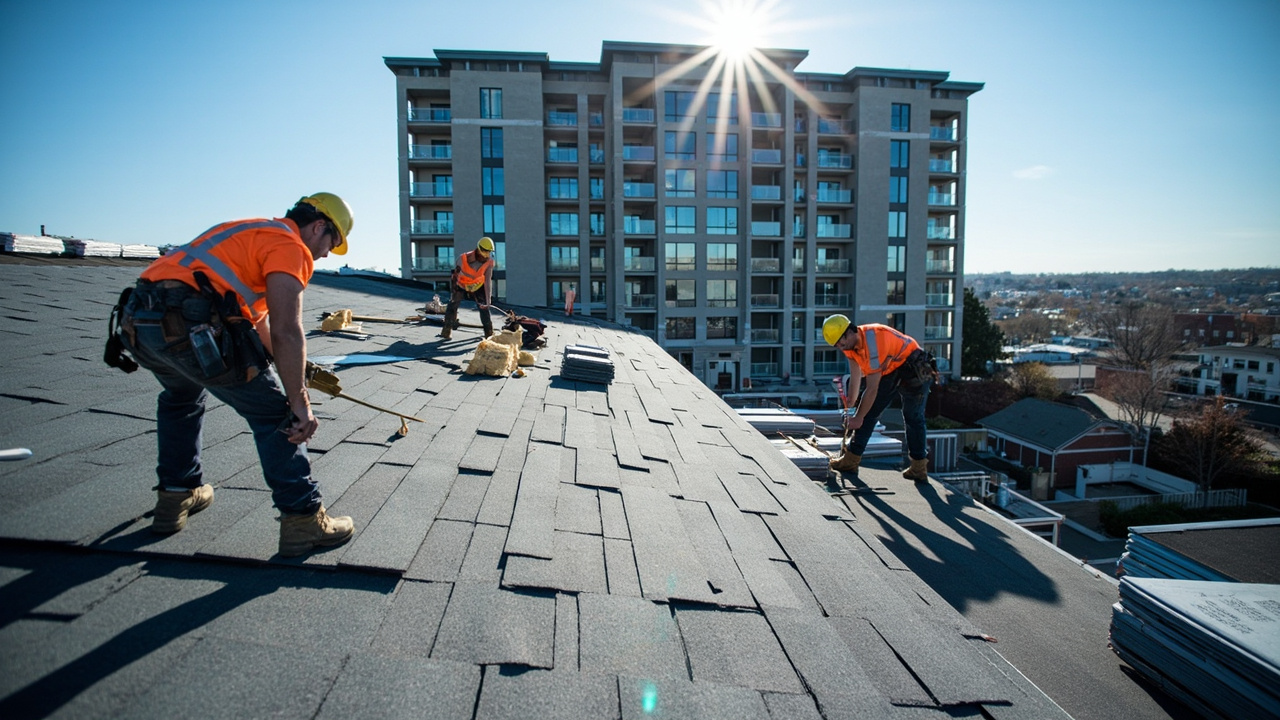
Our installation crews understand phased construction scheduling. We section the roof into zones that allow continuous tenant occupancy. You stay cash-flow positive while we work. We coordinate with your maintenance team to schedule around rent cycles and avoid disruptions during peak leasing seasons. Residential crews do not think this way because they do not manage occupied buildings.

We specify commercial-grade membrane systems rated for the ponding water conditions common to low-slope roofs in St. Louis. That means reinforced TPO or PVC with heat-welded seams, not mechanically fastened EPDM that depends on adhesive integrity. We install tapered insulation systems that create positive drainage toward scuppers and eliminate standing water. Flat roofs do not exist in proper commercial design.

Flashing details around parapet walls and mechanical curbs follow NRCA standards, not residential shortcuts. We use factory-formed components and stainless steel fasteners rated for high-wind zones. St. Louis sees severe thunderstorm wind events that peel back improperly secured edge metal. Our base flashing integrates with wall assemblies to prevent water intrusion at the most vulnerable transition points. This level of detail separates multifamily roofing from basic residential work.

What Happens During Your Apartment Roofing Project

Apartment Complex Roofing in St. Louis – Minimize Downtime and Protect Your Investment
01

Building Assessment and Planning

We conduct a full roof inspection that includes core samples to evaluate insulation condition and deck integrity. You receive a written report with thermal imaging data, moisture maps, and code compliance analysis. We identify structural loading capacity for new material weight and verify that existing drainage systems meet current standards. This assessment determines whether you need a full tear-off or qualify for a restoration system that reduces costs and waste.
02

Phased Installation Coordination

We divide your roof into work zones that keep tenant disruption minimal. Our project manager coordinates daily schedules with your property staff to avoid conflicts with showings or maintenance calls. We stage materials in designated areas that do not block parking or access points. Noise-sensitive activities happen during agreed windows. You maintain normal operations while we install your new multi-unit roofing system using commercial-grade TPO or PVC membranes with fully adhered or mechanically attached insulation.
03

Final Inspection and Documentation

We walk the completed roof with your team to verify all penetrations are sealed and drainage flows properly. You receive as-built drawings, warranty documentation, and a maintenance protocol specific to your membrane system. We photograph all flashing details and mechanical curb installations for your records. Our final report includes recommended inspection intervals and a priority list for any deferred maintenance items on adjacent building components. You get a turnkey asset ready for your next budget cycle.

Why St. Louis Property Owners Choose Pioneer Roofing for Multi-Family Projects

Local building departments enforce the 2018 International Building Code with St. Louis amendments that affect fire ratings and wind uplift requirements for multi-family housing roofing. We maintain current certification in these codes and understand how they apply to your specific occupancy classification. Out-of-area contractors miss these nuances and create permit delays that extend your project timeline.

We have established relationships with commercial suppliers who stock the wide-width membrane rolls and specialty fasteners required for efficient large-format installation. Residential suppliers do not carry these products. That means we avoid material delays that halt progress and expose your building to weather during construction gaps. Our crews work with the same commercial-grade materials on every project, which eliminates the learning curve that slows down residential teams attempting commercial work.

St. Louis's brick and masonry construction requires specialized flashing techniques that differ from wood-framed residential buildings. We install through-wall counterflashing that integrates with mortar joints and use compatible sealants rated for masonry substrate movement. Our sheet metal fabrication matches the architectural details common to mid-rise apartment buildings throughout University City, Clayton, and the Central West End. We understand how these buildings were constructed and how to properly tie new roofing assemblies into existing wall systems.

You also get accountability. We carry commercial general liability coverage with aggregate limits appropriate for multi-family projects. Our workers compensation insurance covers the crew size required for your building square footage. We provide certificates of insurance that satisfy your lender and property insurance carrier requirements. Residential contractors often lack adequate coverage limits for commercial exposure.

What to Expect from Your Apartment Complex Roofing Project

Project Timeline and Scheduling

Most apartment building roofing projects take two to four weeks, depending on building size and weather windows. We provide a detailed schedule during the planning phase that identifies critical path activities and weather contingencies. Our crews start early to maximize daylight hours and minimize noise during evening hours when tenants are home. We coordinate material deliveries to avoid blocking parking or access routes. You receive daily progress updates and photo documentation. Weather delays get communicated immediately with revised completion dates. We do not leave your building exposed overnight without temporary weather protection.

Initial Evaluation and Scope Development

Our evaluation includes roof access to inspect membrane condition, fastener pull tests, and drainage flow verification. We use moisture meters to check for wet insulation and examine flashing at all penetrations. You receive a written assessment that breaks down repair versus replacement costs with projected service life for each option. We identify code upgrade requirements and calculate structural loading if you plan to add insulation thickness. The evaluation takes two to three hours for typical apartment complexes. We provide the report within 48 hours with material specifications and installation methodology. You get transparency before you commit.

Quality Standards and Final Deliverable

Your completed roof includes heat-welded seams tested with probe tools to verify bond integrity. All penetrations receive factory-formed boots or pitch pans filled with proper sealant. Edge metal gets mechanically fastened at code-required intervals with concealed clips. We install new overflow drains if your existing system does not meet current plumbing code. Final inspection includes water testing at drains and a complete photo record of all flashing details. You receive material warranty documentation and our workmanship warranty. The roof is ready for your insurance inspection and meets all requirements for your lender's engineering review.

Maintenance Planning and Long-Term Support

We provide a maintenance manual specific to your membrane system with recommended inspection intervals and cleaning procedures. TPO and PVC roofs require different care than EPDM or modified bitumen systems. We identify which sealants to use for minor repairs and which conditions require professional service. Our maintenance program includes annual inspections that document roof condition and catch small problems before they become expensive emergencies. You get priority scheduling for storm damage response and a direct line to our commercial division. We also maintain as-built drawings and material specifications for future work. Proper maintenance extends service life and protects your capital investment.

Frequently Asked Questions

You Have Questions,
We Have Answers

What type of roof do apartment buildings have? +

Most apartment buildings in St. Louis use low-slope or flat roofing systems. Common materials include TPO, EPDM rubber membrane, modified bitumen, and built-up roofing (BUR). Larger complexes often install TPO due to energy efficiency and reflectivity, which helps manage cooling costs during humid St. Louis summers. Older buildings may have BUR systems with gravel surfacing. The choice depends on building age, budget, and drainage requirements. St. Louis freeze-thaw cycles demand proper membrane installation to prevent ponding water and premature failure. Multi-family properties require systems that balance longevity with minimal tenant disruption during installation.

How much should a 2000 sq ft roof cost? +

For commercial apartment roofing in St. Louis, square footage alone does not determine cost. Material type drives pricing. TPO or EPDM membrane systems vary based on thickness, insulation requirements, and existing roof condition. Substrate repairs, drainage improvements, and code compliance upgrades affect total investment. St. Louis buildings often need enhanced insulation due to energy code updates. Expect variables like tear-off complexity, access limitations, and required flashing work around HVAC units to impact budget. Request detailed scope documentation from contractors, including material specifications and warranty terms. Avoid contractors who quote without thorough roof inspection.

How often do apartment roofs need to be replaced? +

Apartment roofs in St. Louis typically require replacement every 15 to 30 years, depending on material and maintenance. TPO and EPDM membranes last 20 to 25 years with proper upkeep. Modified bitumen systems average 15 to 20 years. Built-up roofing can reach 30 years if maintained. St. Louis weather accelerates wear through freeze-thaw cycles, ponding water from humidity, and UV exposure. Deferred maintenance shortens lifespan significantly. Schedule biannual inspections to catch small issues before they escalate. Properties near the Mississippi River face additional moisture challenges. Proactive repair programs extend roof life and protect your investment.

How to tell if a roofer is lying? +

Verify contractor claims through documentation. Request proof of active insurance, including general liability and workers compensation certificates. Check references from other St. Louis apartment complexes they have serviced. Be cautious if a roofer pressures immediate decisions, quotes without inspection, or requires large upfront deposits. Legitimate contractors provide detailed written estimates with material specifications, not vague line items. Ask about manufacturer certifications for TPO or EPDM installation. Review their business registration with Missouri Secretary of State. Red flags include cash-only requests, no local address, or unwillingness to pull required building permits. Trust contractors who answer technical questions confidently.

How St. Louis Weather Patterns Accelerate Apartment Roof Deterioration

St. Louis sits at the confluence of three major weather systems that create extreme temperature swings and high humidity. Summer temperatures regularly exceed 90 degrees with humidity above 70 percent, which accelerates UV degradation of membrane surfaces. Winter brings freeze-thaw cycles that expand trapped moisture and split seams on improperly installed systems. The city averages 44 inches of annual precipitation, much of it from severe thunderstorms with high wind loads that test edge metal and flashing integrity. Apartment complex roofing systems face constant thermal cycling and moisture exposure that residential roofs never experience at this intensity. Low-slope designs common to multifamily buildings compound these problems by allowing water to pond in valleys where drainage systems clog with organic debris from the urban tree canopy.

Pioneer Roofing St. Louis has worked with property management firms throughout the metro area for years. We understand the occupancy permit requirements enforced by St. Louis City and County building departments. We know which inspectors prioritize fire-rated assemblies and which focus on energy code compliance. Our crews have installed commercial apartment roofing on buildings throughout Soulard, Tower Grove, and the Delmar Loop. We source materials from local suppliers who maintain inventory for emergency repairs when storm damage requires immediate response. You get a contractor who understands the regulatory environment and has the supplier relationships to keep your project moving. Local expertise matters when building departments require documentation and your insurance company needs proof of code-compliant installation.
Roofing Services in The St. Louis Area

Pioneer Roofing is proud to serve the entire St. Louis metropolitan area and surrounding communities. Our local presence means we are always nearby and ready to respond quickly to your roofing needs, whether you are located in the heart of St. Louis or the greater county. View our location and service radius on the map to confirm we cover your neighborhood and then call us to schedule your service!

Address:
Pioneer Roofing St. Louis, 1031 Lami St, St. Louis, MO, 63104

Additional Services We Offer

Our news updates

Latest Articles & News from The Blogs

Can You Actually Install a New Roof Over Your Old Shingles? Roofing a home in St. Louis comes with unique…

Can You Actually Install a New Roof Over Your Old Shingles?

Can You Actually Install a New Roof Over Your Old Shingles? Roofing a home in St. Louis comes with unique…

Why Your Neighbors in Manchester are Choosing Impact Rated Materials

Why Your Neighbors in Manchester are Choosing Impact Rated Materials Living in Manchester means dealing with the unpredictable St. Louis…

Preparing Your Roof for the Sudden Shifts of St. Louis Weather Patterns

Preparing Your Roof for the Sudden Shifts of St. Louis Weather Patterns Your roof faces more than just rain and…

Contact Us

Call Pioneer Roofing St. Louis at (314) 417-7774 for a detailed roof assessment and project proposal. We provide transparent pricing and realistic timelines. Your tenants stay in place while we deliver a roof built to last.