menu

Shopping Center Roof Repair in St. Louis | Minimize Downtime and Protect Your Revenue Stream

Expert commercial retail roof repair that keeps your shopping center operational, protects tenant relationships, and prevents liability exposure across St. Louis metro properties.

Slider Image 1
Slider Image 2
Slider Image 3
Slider Image 4
Slider Image 5
Slider Image 7
Slider Image 8
Slider Image 9
Slider Image 10
Slider Image 11

When Your Shopping Center Roof Fails, Your Business Revenue Stops

A compromised roof system on your shopping center creates immediate financial exposure. Water intrusion damages tenant inventory, triggers lease disputes, and forces temporary closures that cascade into revenue loss. In St. Louis, the combination of freeze-thaw cycles and severe storm activity accelerates membrane deterioration on flat and low-slope commercial roofs common to retail properties.

The Gateway City's climate produces rapid temperature swings that expand and contract roofing materials. This constant stress creates separation at seams, cracks penetration points around HVAC units, and compromises flashing around parapet walls. When a retail center roof fails during business hours, you face tenant complaints, potential code violations, and insurance claims that threaten your occupancy rates.

Strip mall roof repair cannot wait until next quarter. A small leak in one retail unit spreads to adjacent spaces through shared wall cavities and drop ceilings. Shopping complex roof repair requires immediate response to prevent mold growth in climate-controlled spaces and to avoid ADA compliance issues when water creates slip hazards in common areas.

Commercial retail roof repair addresses multiple failure points simultaneously. The EPDM and TPO membranes used on most St. Louis shopping centers show stress first at penetrations, transitions, and drainage areas. Shopping mall roof leak repair becomes urgent when water reaches electrical systems or damages structural decking that supports rooftop equipment.

Your property requires a contractor who understands the liability implications and tenant coordination needs specific to multi-tenant retail properties. Response time directly correlates to damage limitation and business continuity for your tenants.

When Your Shopping Center Roof Fails, Your Business Revenue Stops
Commercial Roof Systems Built for Multi-Tenant Operations

Commercial Roof Systems Built for Multi-Tenant Operations

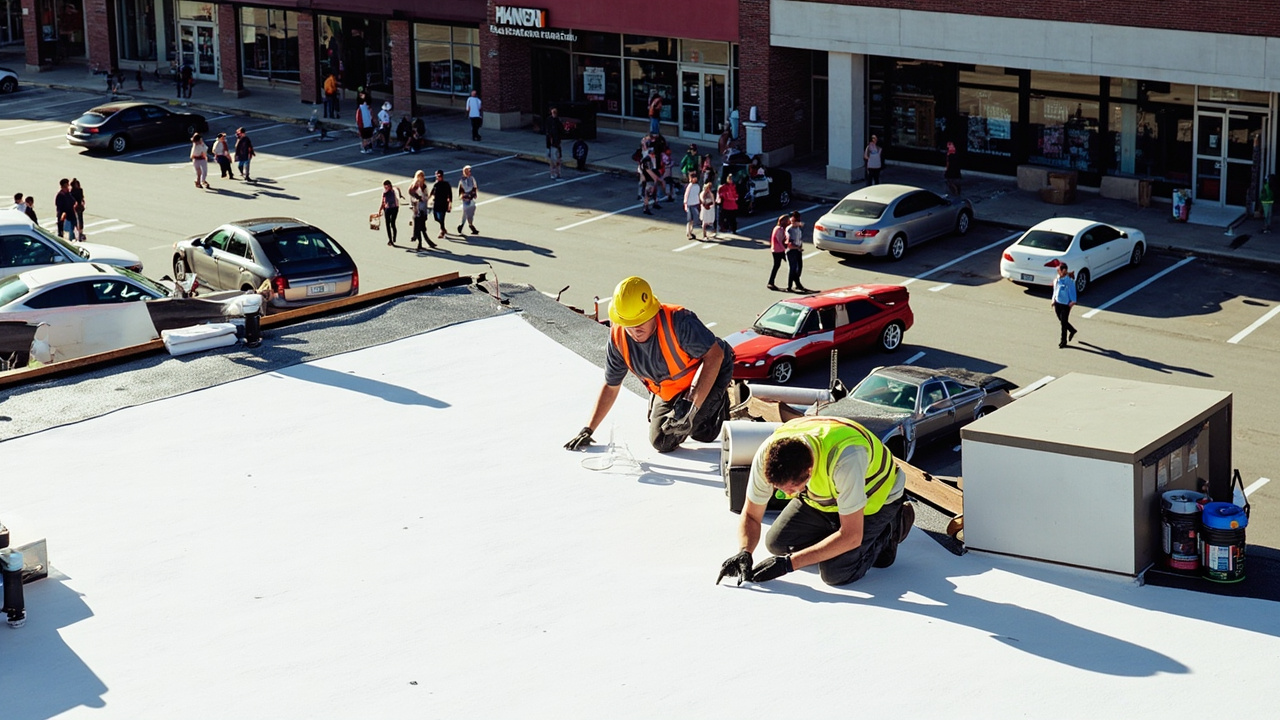
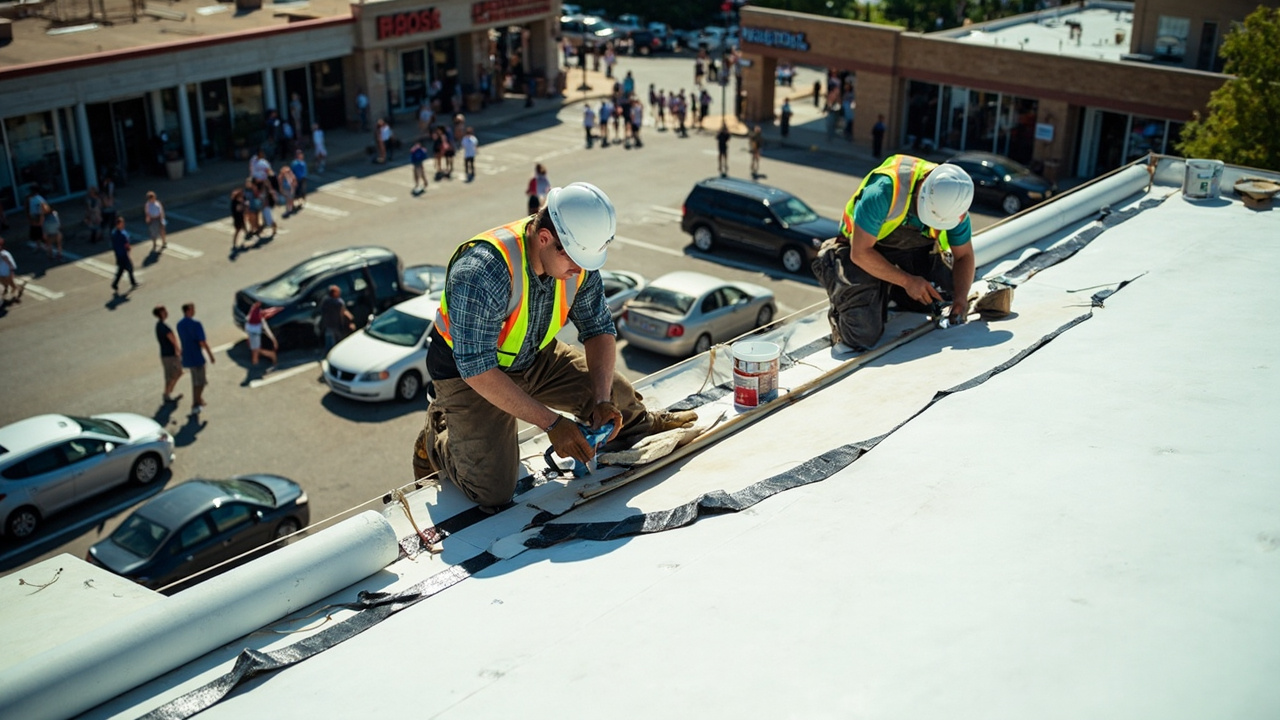
Shopping center roof repair requires zone isolation to keep businesses operational during repairs. We section the roof into work areas that allow us to address failures without shutting down the entire property. This approach maintains tenant access and prevents revenue interruption while we resolve structural issues.

Our process begins with infrared scanning to map moisture intrusion beneath the membrane. This technology identifies saturated insulation and compromised decking without destructive testing across the entire roof plane. We pinpoint failure zones, assess substrate conditions, and calculate load capacity for equipment replacement before beginning physical repairs.

For retail center roof repair, we coordinate with your property management schedule to minimize parking lot disruption and maintain customer access. Our crews stage materials in designated areas, use equipment that reduces noise transmission to occupied spaces below, and complete tear-offs in sections that protect adjacent tenants from debris and weather exposure.

Strip mall roof repair often reveals systemic drainage problems. St. Louis buildings constructed between 1970 and 1990 frequently have undersized drains and insufficient slope that creates ponding water. We re-engineer drainage paths, add supplementary scuppers, and install tapered insulation systems that move water to collection points efficiently.

Shopping complex roof repair addresses parapet wall failures common in older retail construction. We rebuild coping caps, install through-wall flashing that meets current code requirements, and seal masonry joints that allow water penetration during wind-driven rain events. This prevents interior damage to demising walls between tenant spaces.

The membrane systems we install for commercial retail properties carry Class A fire ratings and meet FM Global windstorm requirements for St. Louis wind zones. We use mechanically fastened systems that resist uplift during severe weather and allow for future repairs without full replacement.

How We Execute Multi-Tenant Roof Repairs

Shopping Center Roof Repair in St. Louis | Minimize Downtime and Protect Your Revenue Stream
01

Emergency Assessment and Containment

We respond to shopping center roof failures within hours to assess damage scope and install temporary protection. Our team maps active leaks, documents affected areas with thermal imaging, and installs waterproof barriers that allow tenants to continue operations. We provide detailed reports with photographic evidence for your insurance adjuster and create a phased repair schedule that minimizes business disruption across the property.
02

Coordinated Repair Execution

We schedule work during off-hours or coordinate with tenant operations to maintain customer access. Our crews isolate work zones with barriers, protect HVAC equipment and electrical systems, and use materials that cure quickly to reduce weather vulnerability. We complete structural decking replacement, install new insulation boards with proper R-values for energy code compliance, and apply membrane systems with factory-trained installation crews.
03

System Testing and Documentation

We flood-test all repaired sections to verify waterproofing integrity before final inspection. You receive complete documentation including material certifications, installation photos, and warranty registration for your property files. We provide maintenance protocols specific to your roof system and schedule annual inspections that identify minor issues before they become tenant emergencies or insurance claims.

Why St. Louis Property Managers Choose Pioneer Roofing

Shopping center roof repair in St. Louis requires understanding the specific challenges of Gateway City commercial construction. Properties built during the retail expansion of the 1980s and 1990s used built-up roofing systems that have exceeded their design life. These buildings now require membrane replacement with modern single-ply systems that offer better performance and longer service intervals.

We understand St. Louis building code requirements for commercial roof replacement, including permit procedures, inspection protocols, and energy code compliance. The 2018 International Building Code adoption by St. Louis County changed insulation requirements for commercial re-roofing projects. We navigate these regulations efficiently to prevent delays that extend your construction timeline and tenant disruption.

Our familiarity with local architectural styles common to St. Louis retail properties means we recognize typical failure patterns. The masonry construction prevalent in older shopping centers creates specific flashing challenges at parapet walls and expansion joints. We detail these transitions correctly to prevent the recurring leaks that plague properties when contractors use generic approaches.

Pioneer Roofing St. Louis maintains relationships with local suppliers that ensure material availability during peak construction seasons. When severe weather damages multiple properties simultaneously, our established supply chain prevents the delays that leave your roof vulnerable while contractors wait for materials.

We coordinate with your existing vendors, including HVAC contractors, electricians, and property maintenance teams. This collaborative approach prevents conflicts between trades and ensures that rooftop equipment modifications happen in proper sequence. Your tenants experience minimal disruption because we manage the entire process as an integrated project rather than isolated tasks.

Our project managers communicate directly with your leasing team to address tenant concerns and provide status updates that you can share with property owners. This transparency reduces the management burden on your staff during what is already a stressful situation for multi-tenant properties.

What Your Shopping Center Repair Includes

Rapid Response Timeline

Emergency roof failures receive same-day response for assessment and temporary containment. We mobilize crews within four hours for active leaks that threaten tenant operations or inventory. Scheduled repairs begin within five business days after approval, with work phased to maintain property operations. Most shopping center roof repairs complete within two to four weeks depending on building size and damage extent. We provide daily progress updates to your property management team and adjust schedules to accommodate tenant needs or weather delays that affect installation quality.

Comprehensive Roof Evaluation

Our initial assessment includes moisture surveys using infrared technology, core samples to evaluate insulation and decking conditions, and structural load calculations for equipment placement. We test drainage system capacity, inspect all penetrations and transitions, and photograph existing conditions for your records. You receive a detailed report that separates immediate repairs from preventive maintenance items, allowing you to budget appropriately. We identify code compliance issues that could trigger violations during routine inspections and provide solutions that meet current standards without unnecessary expense.

Code-Compliant Installation Standards

All shopping center roof repairs meet current St. Louis building codes, FM Global windstorm requirements, and manufacturer specifications for warranty compliance. We use mechanically fastened membrane systems rated for local wind zones, install proper insulation values that satisfy energy code requirements, and detail all flashings to prevent water intrusion. Our installations pass third-party inspections without callbacks or corrections. You receive material certifications, installation photos, and warranty documentation organized for easy reference during property transactions or refinancing. The roof systems we install provide 15 to 25 years of service life with proper maintenance.

Ongoing Maintenance Programs

We offer scheduled inspection services that identify minor issues before they become emergency repairs. Bi-annual inspections include drain cleaning, sealant renewal at penetrations, and documentation of roof conditions for your property files. These preventive visits extend roof life, reduce emergency repair costs, and provide the maintenance records that insurance carriers require for claims processing. We coordinate inspections with your property management schedule to minimize tenant disruption. Emergency service remains available for storm damage or unexpected failures between scheduled visits. Maintenance contracts include priority response and preferred pricing for your portfolio properties.

Frequently Asked Questions

You Have Questions,
We Have Answers

What's the average cost to patch a roof? +

Commercial roof patching for shopping centers in St. Louis varies widely based on damage scope and system type. Small membrane repairs on flat roofs typically run lower per square foot than structural repairs requiring decking replacement. Factors affecting cost include access requirements, roof height, material compatibility, and whether you need emergency service. St. Louis freeze-thaw cycles and summer storms often cause hidden substrate damage that requires more extensive repairs than surface patching. Request an infrared moisture scan to identify compromised insulation before agreeing to patch-only approaches. This prevents recurring leaks and tenant disruption.

How much should it cost to fix a roof? +

Shopping center roof repair costs depend on the commercial roofing system, damage extent, and structural complications. Single-ply membrane repairs differ significantly from built-up or modified bitumen systems common in older St. Louis shopping centers. Factor in costs for tear-off, substrate replacement, flashing upgrades, and code compliance. Ponding water issues, common on flat commercial roofs in the St. Louis metro, often require tapered insulation systems beyond basic repairs. Obtain multiple detailed scopes of work that separate materials, labor, and structural components. This allows accurate comparison and prevents change orders that disrupt tenant operations.

How to get a roof replaced for free? +

Free commercial roof replacement for shopping centers is rare. Some manufacturers offer rebate programs when you upgrade to energy-efficient systems, reducing operational costs. Insurance claims from hail or wind damage may cover replacement costs minus your deductible. St. Louis experiences frequent severe weather events that qualify for coverage. Document all storm dates and damage immediately. Some commercial roofing contractors offer financing programs that eliminate upfront costs, though you pay over time. Government grants for energy retrofits occasionally apply to commercial properties. Focus on maximizing insurance claims and exploring manufacturer incentives rather than expecting free replacement.

Does commercial insurance cover roof replacement? +

Commercial property insurance typically covers roof replacement if damage results from covered perils like hail, wind, fire, or vandalism. Coverage depends on your policy structure and whether you carry replacement cost or actual cash value coverage. St. Louis shopping centers face significant storm exposure, making comprehensive coverage critical. Insurance excludes damage from deferred maintenance, wear and tear, or pre-existing conditions. Many policies require regular roof inspections and maintenance documentation. Poor drainage causing ponding water or moss growth indicates maintenance neglect that voids claims. Review your policy's depreciation schedule and consider roof age when evaluating coverage adequacy.

What is the cheapest way to repair a roof? +

The cheapest immediate fix involves temporary patching with sealants or fabric-reinforced coatings. This approach carries significant risk for shopping centers. Short-term fixes often fail during St. Louis freeze-thaw cycles, causing tenant disruption and potential liability exposure. The most cost-effective long-term strategy involves addressing root causes rather than symptoms. Proper flashing repairs, drainage corrections, and targeted membrane replacement prevent recurring failures. Coating systems over sound substrates extend life economically if applied correctly. Avoid cheap fixes that void manufacturer warranties or violate building codes. Calculate total cost of ownership, including business interruption risk, when comparing repair approaches.

Is it better to patch a roof or replace it? +

The decision depends on roof age, damage extent, and remaining serviceable life. Shopping centers require continuity planning that patching alone cannot guarantee. Patching makes sense for localized damage on roofs under 10 years old with good overall condition. Replace when you face multiple leak points, widespread membrane deterioration, or saturated insulation. St. Louis commercial roofs approaching 20 years old often hide systemic failures beneath surface symptoms. Thermal imaging reveals moisture intrusion that compromises R-value and increases HVAC costs. Patching a failing roof delays inevitable replacement while risking tenant relationships and property value. Evaluate total system condition before committing to either approach.

What time of year is the cheapest to replace a roof? +

Fall and late winter offer better pricing for commercial roof replacement in St. Louis. Contractors face lower demand after summer storm season ends and before spring rains begin. October through February sometimes brings scheduling flexibility and competitive bids. However, shopping centers must prioritize business continuity over seasonal savings. Temperature restrictions for membrane adhesives and sealants limit winter work on certain systems. St. Louis weather variability makes scheduling unpredictable during shoulder seasons. Plan replacements around tenant lease renewals and low-traffic periods rather than chasing seasonal discounts. Emergency replacements cost significantly more than planned projects regardless of season.

Does homeowners insurance cover roof repair? +

Homeowners insurance does not apply to shopping centers. Commercial property insurance operates under different underwriting standards and coverage triggers. Commercial policies evaluate business interruption risk, liability exposure, and replacement cost differently than residential coverage. St. Louis shopping center owners need commercial policies that address flat roof systems, multiple tenants, and parking lot liability. Coverage depends on policy type, deductible structure, and maintenance documentation. Many commercial insurers require annual roof inspections and maintenance records. Failure to document upkeep provides grounds for claim denial. Work with commercial insurance specialists who understand retail property exposure rather than residential agents.

What is the most expensive part of replacing a roof? +

Structural decking replacement represents the highest cost component in commercial roof projects. When leaks saturate insulation and rot underlying wood or corrode metal decking, costs escalate rapidly. Shopping centers in St. Louis built before 1980 often reveal hidden structural damage during tear-off. Costs include engineering assessments, shoring during replacement, and code upgrades for attachment strength. Parapet repairs, HVAC curb replacements, and extensive flashing details add significant expense. Crane rental for material hoisting on larger shopping centers increases costs substantially. Asbestos abatement in older buildings requires specialized handling. Address leaks immediately to prevent structural damage that multiplies repair costs.

How do I get a new roof if I can't afford it? +

Shopping center owners facing budget constraints have several options beyond personal funds. Commercial property loans or lines of credit spread costs over time while maintaining cash flow. Some contractors offer financing programs through third-party lenders with terms matching roof lifespan. Sale-leaseback arrangements or bringing in equity partners provide capital for necessary replacements. Negotiate with insurance carriers to maximize claim payouts for storm damage. Consider phased replacement approaches that address critical sections first while planning future phases. Energy-efficiency rebates and tax incentives offset some costs. Delaying replacement risks tenant loss and property devaluation that exceed financing costs. Explore commercial lending options immediately when facing system failure.

How St. Louis Weather Patterns Accelerate Shopping Center Roof Deterioration

St. Louis experiences an average of 52 freeze-thaw cycles annually, creating constant expansion and contraction stress on commercial roofing membranes. The temperature swings from below freezing to 50 degrees within 24 hours force water trapped in roofing seams to freeze, expand, and separate membrane bonds. This cycle accelerates on flat retail roofs where ponding water cannot drain before temperatures drop. The Gateway City's position along the Mississippi River creates high humidity that compounds moisture problems in saturated insulation, reducing thermal performance and adding structural load to aging roof decks.

Shopping centers throughout St. Louis County and the metro area require contractors familiar with local permit requirements that vary between municipalities. Commercial roof repairs in Clayton follow different inspection protocols than projects in St. Charles County or the City of St. Louis. We maintain relationships with building departments across the region, understand their specific documentation requirements, and schedule inspections that prevent delays in your project timeline. This local expertise ensures your shopping center roof repair meets all regulatory requirements without the costly corrections that occur when contractors unfamiliar with St. Louis codes attempt commercial projects.
Roofing Services in The St. Louis Area

Pioneer Roofing is proud to serve the entire St. Louis metropolitan area and surrounding communities. Our local presence means we are always nearby and ready to respond quickly to your roofing needs, whether you are located in the heart of St. Louis or the greater county. View our location and service radius on the map to confirm we cover your neighborhood and then call us to schedule your service!

Address:
Pioneer Roofing St. Louis, 1031 Lami St, St. Louis, MO, 63104

Additional Services We Offer

Our news updates

Latest Articles & News from The Blogs

Keeping Rodents Out of Your Roofline and Soffits in Older Lemay Neighborhoods Rodents in your roofline are more than just…

Keeping Rodents Out of Your Roofline and Soffits in Older Lemay Neighborhoods

Keeping Rodents Out of Your Roofline and Soffits in Older Lemay Neighborhoods Rodents in your roofline are more than just…

Popular Shingle Colors That Complement the Red Brick Architecture of St. Louis Hills

Popular Shingle Colors That Complement the Red Brick Architecture of St. Louis Hills Choosing the right roof color for your…

How to Trim Your Trees to Protect Your Roof Without Ruining Your Landscaping in Glendale

How to Trim Your Trees to Protect Your Roof Without Ruining Your Landscaping in Glendale Your mature oak trees provide…

Contact Us

Every day you delay shopping center roof repair increases damage scope and tenant liability exposure. Call Pioneer Roofing St. Louis at (314) 417-7774 for immediate assessment. We respond to commercial roof emergencies across the St. Louis metro area with crews ready to contain damage and begin repairs.